NYISO Agreements --> Service Agreements --> SGIA among NYISO, National Grid, and ELP Granby Solar II
SERVICE AGREEMENT NO. 2934
STANDARD SMALL GENERATOR
INTERCONNECTION AGREEMENT
AMONG THE
NEW YORK INDEPENDENT SYSTEM OPERATOR, INC.,
NIAGARA MOHAWK POWER CORPORATION
D/B/A NATIONAL GRID,
AND
ELP GRANBY SOLAR II LLC
Dated as of December 29, 2025
(ELP Granby Solar II)
TABLE OF CONTENTS
Article 1 Scope and Limitations of Agreement ...................................................................2
1.1 Applicability ........................................................................................................... 2
1.2 Purpose.................................................................................................................... 2
1.3 Scope of Interconnection Service ........................................................................... 2
1.4 Limitations.............................................................................................................. 2
1.5 Responsibilities of the Parties................................................................................. 2
1.6 Parallel Operation Obligations................................................................................ 5
1.7 Metering.................................................................................................................. 5
1.8 Reactive Power and Primary Frequency Response ................................................ 5
1.9 Capitalized Terms ................................................................................................... 8
Article 2 Inspection, Testing, Authorization, and Right of Access ...................................9
2.1 Equipment Testing and Inspection.......................................................................... 9
2.2 Authorization Required Prior to Parallel Operation ............................................... 9
2.3 Right of Access..................................................................................................... 10
Article 3 Effective Date, Term, Termination, and Disconnection...................................11
3.1 Effective Date ....................................................................................................... 11
3.2 Term of Agreement............................................................................................... 11
3.3 Termination........................................................................................................... 11
3.4 Temporary Disconnection..................................................................................... 12
Article 4 Cost Responsibility for Interconnection Facilities and Distribution
Upgrades...............................................................................................................14
4.1 Interconnection Facilities...................................................................................... 14
4.2 Distribution Upgrades........................................................................................... 14
Article 5 Cost Responsibility for System Upgrade Facilities and System
Deliverability Upgrades.......................................................................................15
5.1 Applicability ......................................................................................................... 15
5.2 System Upgrades .................................................................................................. 15
5.3 Special Provisions for Affected Systems.............................................................. 15
Article 6 Billing, Payment, Milestones, and Financial Security ......................................16
6.1 Billing and Payment Procedures and Final Accounting ....................................... 16
6.2 Milestones............................................................................................................. 16
6.3 Financial Security Arrangements.......................................................................... 17
Article 7 Assignment, Liability, Indemnity, Force Majeure, Consequential
Damages, and Default..........................................................................................18
7.1 Assignment ........................................................................................................... 18
7.2 Limitation of Liability........................................................................................... 18
7.3 Indemnity.............................................................................................................. 18
7.4 Consequential Damages........................................................................................ 19
7.5 Force Majeure ....................................................................................................... 20
i
7.6 Breach and Default ............................................................................................... 20
Article 8 Insurance ..............................................................................................................22
Article 9 Confidentiality......................................................................................................23
Article 10 Disputes.................................................................................................................25
Article 11 Taxes......................................................................................................................26
Article 12 Miscellaneous........................................................................................................27
12.1 Governing Law, Regulatory Authority, and Rules ............................................... 27
12.2 Amendment........................................................................................................... 27
12.3 No Third-Party Beneficiaries................................................................................ 27
12.4 Waiver................................................................................................................... 27
12.5 Entire Agreement.................................................................................................. 27
12.6 Multiple Counterparts........................................................................................... 28
12.7 No Partnership ...................................................................................................... 28
12.8 Severability ........................................................................................................... 28
12.9 Security Arrangements.......................................................................................... 28
12.10 Environmental Releases........................................................................................ 28
12.11 Subcontractors....................................................................................................... 28
12.12 Reservation of Rights............................................................................................ 29
12.13 Modifications Related to NYISO’s Compliance with Order No. 2023................ 29
Article 13 Notices ...................................................................................................................30
13.1 General.................................................................................................................. 30
13.2 Billing and Payment.............................................................................................. 31
13.3 Alternative Forms of Notice ................................................................................. 31
13.4 Designated Operating Representative................................................................... 32
13.5 Changes to the Notice Information....................................................................... 33
Article 14 Signatures .............................................................................................................34
Attachment 1 Glossary of Terms
Attachment 2 Detailed Scope of Work, Including Description and Costs of the Small Generating
Facility, Interconnection Facilities, and Metering Equipment
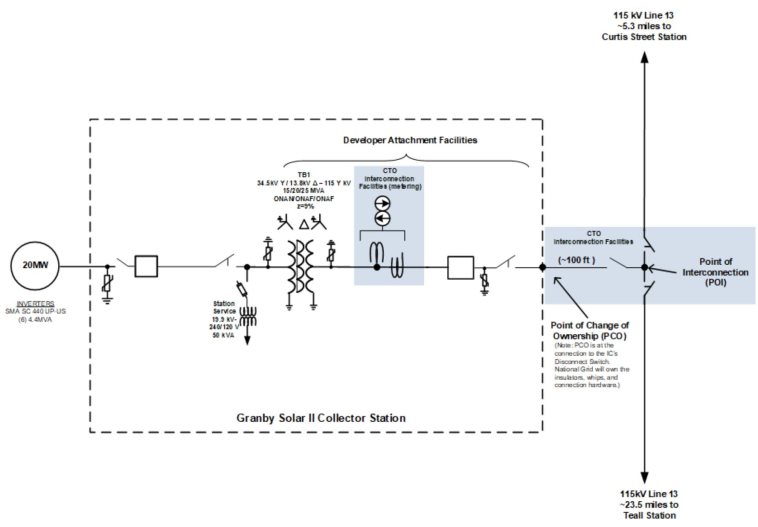
Attachment 3 One-line Diagram Depicting the Small Generating Facility, Interconnection
Facilities, Metering Equipment, and Upgrades
Attachment 5 Additional Operating Requirements for the New York State Transmission System,
the Distribution System and Affected Systems Needed to Support the Interconnection
Customer’s Needs
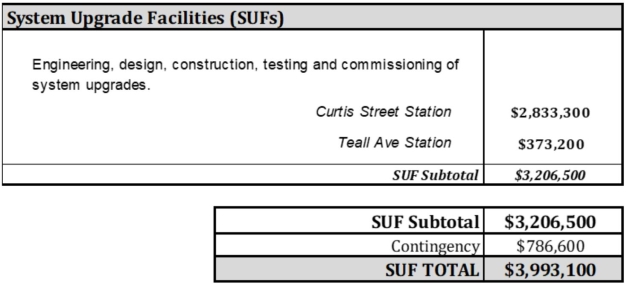
Attachment 6 Connecting Transmission Owner’s Description of its Upgrades and Best Estimate of Upgrade Costs
ii
Attachment 7 Insurance Coverage
Attachment 8 Initial Synchronization Date
Attachment 9 Commercial Operation Date
iii
This Standard Small Generator Interconnection Agreement (“Agreement” or “SGIA”) is made
and entered into this 29th day of December, 2025, by and among the New York Independent
System Operator, Inc., a not-for-profit corporation organized and existing under the laws of the
State of New York (“NYISO”) and Niagara Mohawk Power Corporation d/b/a National Grid a
corporation organized and existing under the laws of the State of New York (“Connecting
Transmission Owner”), and ELP Granby Solar II LLC, a limited liability company organized and
existing under the laws of the State of New York (“Interconnection Customer”) each hereinafter
sometimes referred to individually as “Party” or referred to collectively as the “Parties.”
In consideration of the mutual covenants set forth herein, the Parties agree as follows:
1
Article 1 Scope and Limitations of Agreement
1.1 Applicability
This Agreement shall be used for all Interconnection Requests submitted under the Small
Generator Interconnection Procedures (SGIP) except for those submitted under the 10 kW
Inverter Process contained in SGIP Attachment 5.
1.2 Purpose
This Agreement governs the terms and conditions under which the Interconnection
Customer’s Small Generating Facility will interconnect with, and operate in parallel with, the
New York State Transmission System or the Distribution System.
1.3 Scope of Interconnection Service
1.3.1 Subject to Section 1 of Attachment 5, the NYISO will provide Energy Resource
Interconnection Service and Capacity Resource Interconnection Service to
Interconnection Customer at the Point of Interconnection.
1.3.2 This Agreement does not constitute an agreement to purchase or deliver the
Interconnection Customer’s power. The purchase or delivery of power and other
services that the Interconnection Customer may require will be covered under
separate agreements, if any, or applicable provisions of NYISO’s or Connecting
Transmission Owner’s tariffs. The Interconnection Customer will be responsible
for separately making all necessary arrangements (including scheduling) for
delivery of electricity in accordance with the applicable provisions of the ISO
OATT and Connecting Transmission Owner’s tariff. The execution of this
Agreement does not constitute a request for, nor agreement to, provide Energy,
any Ancillary Services or Installed Capacity under the NYISO Services Tariff or
any Connecting Transmission Owner’s tariff. If Interconnection Customer wishes
to supply or purchase Energy, Installed Capacity or Ancillary Services, then
Interconnection Customer will make application to do so in accordance with the
NYISO Services Tariff or Connecting Transmission Owner’s tariff.
1.4 Limitations
Nothing in this Agreement is intended to affect any other agreement by and among the
NYISO, Connecting Transmission Owner and the Interconnection Customer, except as otherwise
expressly provided herein.
1.5 Responsibilities of the Parties
1.5.1 The Parties shall perform all obligations of this Agreement in accordance with all
Applicable Laws and Regulations, Operating Requirements, and Good Utility
Practice.
2
1.5.2 The Interconnection Customer shall construct, interconnect, operate and maintain
its Small Generating Facility and construct, operate, and maintain its
Interconnection Facilities in accordance with the applicable manufacturer’s
recommended maintenance schedule, and in accordance with this Agreement, and
with Good Utility Practice.
1.5.3 The Connecting Transmission Owner shall construct, operate, and maintain its
Interconnection Facilities and Upgrades covered by this Agreement in accordance
with this Agreement, and with Good Utility Practice. If all the Parties agree, the
Interconnection Customer may construct the Connecting Transmission Owner’s
Interconnection Facilities and Upgrades as specified in Attachment 2 and
Attachment 6.
1.5.4 The Interconnection Customer agrees to construct its facilities or systems in
accordance with applicable specifications that meet or exceed those provided by
the National Electrical Safety Code, the American National Standards Institute,
IEEE, Underwriter’s Laboratory, and Operating Requirements in effect at the time
of construction and other applicable national and state codes and standards. The
Interconnection Customer agrees to design, install, maintain, and operate its Small
Generating Facility so as to reasonably minimize the likelihood of a disturbance
adversely affecting or impairing the system or equipment of the Connecting
Transmission Owner or Affected Systems.
1.5.5 The Connecting Transmission Owner and Interconnection Customer shall operate,
maintain, repair, and inspect, and shall be fully responsible for the facilities that it
now or subsequently may own unless otherwise specified in the Attachments to
this Agreement. Each of those Parties shall be responsible for the safe
installation, maintenance, repair and condition of their respective lines and
appurtenances on their respective sides of the point of change of ownership. The
Connecting Transmission Owner and the Interconnection Customer, as
appropriate, shall provide Interconnection Facilities that adequately protect the
Connecting Transmission Owner’s electric system, personnel, and other persons
from damage and injury. The allocation of responsibility for the design,
installation, operation, maintenance and ownership of Interconnection Facilities
shall be delineated in the Attachments to this Agreement.
1.5.6 The NYISO shall coordinate with all Affected Systems to support the
interconnection. The Connecting Transmission Owner shall cooperate with the
NYISO in these efforts.
1.5.7 The Interconnection Customer shall ensure “frequency ride through” capability
and “voltage ride through” capability of its Small Generating Facility. The
Interconnection Customer shall enable these capabilities such that its Small
Generating Facility shall not disconnect automatically or instantaneously from the
system or equipment of the Connecting Transmission Owner and any Affected
Systems for a defined under-frequency or over-frequency condition, or an under-
voltage or over-voltage condition, as tested pursuant to Section 2.1 of this
3
agreement. The defined conditions shall be in accordance with Good Utility
Practice and consistent with any standards and guidelines that are applied to other
generating facilities in the Balancing Authority Area on a comparable basis. The
Small Generating Facility’s protective equipment settings shall comply with the
Transmission Owner’s automatic load-shed program. The Transmission Owner
shall review the protective equipment settings to confirm compliance with the
automatic load-shed program. The term “ride through” as used herein shall mean
the ability of a Small Generating Facility to stay connected to and synchronized
with the system or equipment of the Transmission Owner and any Affected
Systems during system disturbances within a range of conditions, in accordance
with Good Utility Practice and consistent with any standards and guidelines that
are applied to other generating facilities in the Balancing Authority on a
comparable basis. The term “frequency ride through” as used herein shall mean
the ability of a Small Generating Facility to stay connected to and synchronized
with the system or equipment of the Transmission Owner and any Affected
Systems during system disturbances within a range of under-frequency and over-
frequency conditions, in accordance with Good Utility Practice and consistent
with any standards and guidelines that are applied to other generating facilities in
the Balancing Authority Area on a comparable basis. The term “voltage ride
through” as used herein shall mean the ability of a Small Generating Facility to
stay connected to and synchronized with the system or equipment of the
Transmission Owner and any Affected Systems during system disturbances
within a range of under-voltage and over-voltage conditions, in accordance with
Good Utility Practice and consistent with any standards and guidelines that are
applied to other generating facilities in the Balancing Authority Area on a
comparable basis unless the Transmission Owner in whose Transmission District
the Small Generating Facility interconnects has established different requirements
that apply on a comparable basis in accordance with Good Utility Practice. For
abnormal frequency conditions and voltage conditions within the “no trip zone”
as that term is defined by ERO Reliability Standard PRC-024-3, any successor
mandatory ride through ERO standards, or any more stringent NPCC or NYSRC
requirements applicable to Generating Facilities in the Balancing Authority Area
on a comparable basis, the non-synchronous Small Generating Facility must
ensure that, within any physical limitations of the Small Generating Facility, its
control and protection settings are configured or set to (1) continue active power
production during disturbance and post disturbance periods at pre-disturbance
levels unless reactive power priority mode is enabled or unless providing primary
frequency response or fast frequency response; (2) minimize reductions in active
power and remain within dynamic voltage and current limits, if reactive power
priority mode is enabled, unless providing primary frequency response or fast
frequency response; (3) not artificially limit dynamic reactive power capability
during disturbances and (4) return to pre-disturbance active power levels without
artificial ramp rate limits if active power is reduced, unless providing primary
frequency response or fast frequency response.
4

1.6 Parallel Operation Obligations
Once the Small Generating Facility has been authorized to commence parallel operation,
the Interconnection Customer shall abide by all rules and procedures pertaining to the parallel
operation of the Small Generating Facility in the applicable New York Control Area, including,
but not limited to: (1) the rules and procedures concerning the operation of generation set forth in
the NYISO tariffs or ISO Procedures or the Connecting Transmission Owner’s tariff; (2) any
requirements consistent with Good Utility Practice or that are necessary to ensure the safe and
reliable operation of the Transmission System or Distribution System; and (3) the Operating
Requirements set forth in Attachment 5 of this Agreement.
1.7 Metering
The Interconnection Customer shall be responsible for the Connecting Transmission
Owner’s reasonable and necessary cost for the purchase, installation, operation, maintenance,
testing, repair, and replacement of metering and data acquisition equipment specified in
Attachments 2 and 3 of this Agreement. The Interconnection Customer’s metering (and data
acquisition, as required) equipment shall conform to applicable industry rules and Operating
Requirements.
1.8 Reactive Power and Primary Frequency Response
1.8.1 Power Factor Design Criteria
1.8.1.1 Synchronous Generation. The Interconnection Customer shall design its
Small Generating Facility to maintain a composite power delivery at continuous
rated power output at the Point of Interconnection at a power factor within the
range of 0.95 leading to 0.95 lagging, unless the NYISO or the Transmission
Owner in whose Transmission District the Small Generating Facility interconnects has established different requirements that apply to all similarly
situated generators in the New York Control Area or Transmission District (as
applicable) on a comparable basis, in accordance with Good Utility Practice.
1.8.1.2 Non-Synchronous Generation. The Interconnection Customer shall
design its Small Generating Facility to maintain a composite power delivery at
continuous rated power output at the high-side of the generator substation at a
power factor within the range of 0.95 leading to 0.95 lagging, unless the NYISO
or the Transmission Owner in whose Transmission District the Small Generating
Facility interconnects has established a different power factor range that applies to
all similarly situated non-synchronous generators in the New York Control Area
or Transmission District (as applicable) on a comparable basis, in accordance with
Good Utility Practice. This power factor range standard shall be dynamic and can
be met using, for example, power electronics designed to supply this level of
reactive capability (taking into account any limitations due to voltage level, real
power output, etc.) or fixed and switched capacitors, or a combination of the two.
This requirement shall only apply to newly interconnecting non-synchronous
5
generators that have not yet executed a Facilities Study Agreement as of
September 21, 2016.
1.8.2 The NYISO is required to pay the Interconnection Customer for reactive power,
or voltage support service, that the Interconnection Customer provides from the
Small Generating Facility in accordance with Rate Schedule 2 of the NYISO
Services Tariff.
1.8.3 Primary Frequency Response. Interconnection Customer shall ensure the primary
frequency response capability of its Small Generating Facility by installing,
maintaining, and operating a functioning governor or equivalent controls. The
term “functioning governor or equivalent controls” as used herein shall mean the
required hardware and/or software that provides frequency responsive real power
control with the ability to sense changes in system frequency and autonomously
adjust the Small Generating Facility’s real power output in accordance with the
droop and deadband parameters and in the direction needed to correct frequency
deviations. Interconnection Customer is required to install a governor or
equivalent controls with the capability of operating: (1) with a maximum 5
percent droop and ±0.036 Hz deadband; or (2) in accordance with the relevant
droop, deadband, and timely and sustained response settings from an approved
Applicable Reliability Standard providing for equivalent or more stringent
parameters. The droop characteristic shall be: (1) based on the nameplate
capacity of the Small Generating Facility, and shall be linear in the range of
frequencies between 59 to 61 Hz that are outside of the deadband parameter; or
(2) based on an approved Applicable Reliability Standard providing for an
equivalent or more stringent parameter. The deadband parameter shall be: the
range of frequencies above and below nominal (60 Hz) in which the governor or
equivalent controls is not expected to adjust the Small Generating Facility’s real
power output in response to frequency deviations. The deadband shall be
implemented: (1) without a step to the droop curve, that is, once the frequency
deviation exceeds the deadband parameter, the expected change in the Small
Generating Facility’s real power output in response to frequency deviations shall
start from zero and then increase (for under-frequency deviations) or decrease (for
over-frequency deviations) linearly in proportion to the magnitude of the
frequency deviation; or (2) in accordance with an approved Applicable Reliability
Standard providing for an equivalent or more stringent parameter.
Interconnection Customer shall notify NYISO that the primary frequency
response capability of the Small Generating Facility has been tested and
confirmed during commissioning. Once Interconnection Customer has
synchronized the Small Generating Facility with the New York State
Transmission System, Interconnection Customer shall operate the Small
Generating Facility consistent with the provisions specified in Articles 1.8.3.1 and
1.8.3.2 of this Agreement. The primary frequency response requirements
contained herein shall apply to both synchronous and non-synchronous Small
Generating Facilities.
6
1.8.3.1 Governor or Equivalent Controls. Whenever the Small Generating Facility
is operated in parallel with the New York State Transmission System,
Interconnection Customer shall operate the Small Generating Facility with its
governor or equivalent controls in service and responsive to frequency.
Interconnection Customer shall: (1) in coordination with NYISO, set the
deadband parameter to: (1) a maximum of ±0.036 Hz and set the droop parameter
to a maximum of 5 percent; or (2) implement the relevant droop and deadband
settings from an approved Applicable Reliability Standard that provides for
equivalent or more stringent parameters. Interconnection Customer shall be
required to provide the status and settings of the governor and equivalent controls
to NYISO and/or the Connecting Transmission Owner upon request. If
Interconnection Customer needs to operate the Small Generating Facility with its
governor or equivalent controls not in service, Interconnection Customer shall
immediately notify NYISO and the Connecting Transmission Owner, and provide
both with the following information: (1) the operating status of the governor or
equivalent controls (i.e., whether it is currently out of service or when it will be
taken out of service); (2) the reasons for removing the governor or equivalent
controls from service; and (3) a reasonable estimate of when the governor or
equivalent controls will be returned to service. Interconnection Customer shall
make Reasonable Efforts to return its governor or equivalent controls into service
as soon as practicable. Interconnection Customer shall make Reasonable Efforts
to keep outages of the Small Generating Facility’s governor or equivalent controls
to a minimum whenever the Small Generating Facility is operated in parallel with
the New York State Transmission System.
1.8.3.2 Timely and Sustained Response. Interconnection Customer shall ensure
that the Small Generating Facility’s real power response to sustained frequency
deviations outside of the deadband setting is automatically provided and shall
begin immediately after frequency deviates outside of the deadband, and to the
extent the Small Generating Facility has operating capability in the direction
needed to correct the frequency deviation. Interconnection Customer shall not
block or otherwise inhibit the ability of the governor or equivalent controls to
respond and shall ensure that the response is not inhibited, except under certain
operational constraints including, but not limited to, ambient temperature
limitations, physical energy limitations, outages of mechanical equipment, or
regulatory requirements. The Small Generating Facility shall sustain the real
power response at least until system frequency returns to a value within the
deadband setting of the governor or equivalent controls. An Applicable
Reliability Standard with equivalent or more stringent requirements shall
supersede the above requirements.
1.8.3.3 Exemptions. Small Generating Facilities that are regulated by the United
States Nuclear Regulatory Commission shall be exempt from Articles 1.8.3,
1.8.3.1, and 1.8.3.2 of this Agreement. Small Generating Facilities that are
behind the meter generation that is sized-to-load (i.e., the thermal load and the
generation are near-balanced in real-time operation and the generation is primarily
controlled to maintain the unique thermal, chemical, or mechanical output
7
necessary for the operating requirements of its host facility) shall be required to
install primary frequency response capability requirements in accordance with the
droop and deadband capability requirements specified in Article 1.8.3, but shall
be otherwise exempt from the operating requirements in Articles 1.8.3, 1.8.3.1,
1.8.3.2, and 1.8.3.4 of this Agreement.
1.8.3.4 Electric Storage Resources. Interconnection Customer interconnecting an
electric storage resource shall establish an operating range in Attachment 5 of its
SGIA that specifies a minimum state of charge and a maximum state of charge
between which the electric storage resource will be required to provide primary
frequency response consistent with the conditions set forth in Articles 1.8.3,
1.8.3.1, 1.8.3.2, and 1.8.3.3 of this Agreement. Attachment 5 shall specify
whether the operating range is static or dynamic, and shall consider (1) the
expected magnitude of frequency deviations in the interconnection; (2) the
expected duration that system frequency will remain outside of the deadband
parameter in the interconnection; (3) the expected incidence of frequency
deviations outside of the deadband parameter in the interconnection; (4) the
physical capabilities of the electric storage resource; (5) operational limitations of
the electric storage resources due to manufacturer specification; and (6) any other
relevant factors agreed to by the NYISO, Connecting Transmission Owner, and
Interconnection Customer. If the operating range is dynamic, then Attachment 5
must establish how frequently the operating range will be reevaluated and the
factors that may be considered during its reevaluation.
Interconnection Customer’s electric storage resource is required to provide timely
and sustained primary frequency response consistent with Article 1.8.3.2 of this
Agreement when it is online and dispatched to inject electricity to the New York
State Transmission System and/or receive electricity from the New York State
Transmission System. This excludes circumstances when the electric storage
resource is not dispatched to inject electricity to the New York State Transmission
System and/or dispatched to receive electricity from the New York State
Transmission System. If Interconnection Customer’s electric storage resource is
charging at the time of a frequency deviation outside of its deadband parameter, it
is to increase (for over-frequency deviations) or decrease (for under-frequency
deviations) the rate at which it is charging in accordance with its droop parameter.
Interconnection Customer’s electric storage resource is not required to change
from charging to discharging, or vice versa, unless the response necessitated by
the droop and deadband settings requires it to do so and it is technically capable
of making such a transition.
1.9 Capitalized Terms
Capitalized terms used herein shall have the meanings specified in the Glossary of Terms
in Attachment 1 or the body of this Agreement. Capitalized terms used herein that are not so
defined shall have the meanings specified in Appendix 1 of Attachment Z, Section 25.1.2 of
Attachment S, or Section 30.1 of Attachment X of the ISO OATT.
8
Article 2 Inspection, Testing, Authorization, and Right of Access
2.1 Equipment Testing and Inspection
2.1.1 The Interconnection Customer shall test and inspect its Small Generating Facility
and Interconnection Facilities prior to interconnection. The Interconnection
Customer shall notify the NYISO and the Connecting Transmission Owner of
such activities no fewer than five (5) Business Days (or as may be agreed to by
the Parties) prior to such testing and inspection. Testing and inspection shall
occur on a Business Day. The Connecting Transmission Owner may, at its own
expense, send qualified personnel to the Small Generating Facility site to inspect
the interconnection and observe the testing. The Interconnection Customer shall
provide the NYISO and Connecting Transmission Owner a written test report
when such testing and inspection is completed. The Small Generating Facility
may not commence parallel operations if the NYISO, in consultation with the
Connecting Transmission Owner, finds that the Small Generating Facility has not
been installed as agreed upon or may not be operated in a safe and reliable
manner.
2.1.2 The NYISO and Connecting Transmission Owner shall each provide the
Interconnection Customer written acknowledgment that it has received the
Interconnection Customer’s written test report. Such written acknowledgment
shall not be deemed to be or construed as any representation, assurance,
guarantee, or warranty by the NYISO or Connecting Transmission Owner of the
safety, durability, suitability, or reliability of the Small Generating Facility or any
associated control, protective, and safety devices owned or controlled by the
Interconnection Customer or the quality of power produced by the Small
Generating Facility.
2.2 Authorization Required Prior to Parallel Operation
2.2.1 The NYISO, in consultation with the Connecting Transmission Owner, shall use
Reasonable Efforts to list applicable parallel Operating Requirements in
Attachment 5 of this Agreement. Additionally, the NYISO, in consultation with
the Connecting Transmission Owner, shall notify the Interconnection Customer of
any changes to these requirements as soon as they are known. The NYISO and
Connecting Transmission Owner shall make Reasonable Efforts to cooperate with
the Interconnection Customer in meeting requirements necessary for the Interconnection Customer to commence parallel operations by the in-service date.
2.2.2 The Interconnection Customer shall not operate its Small Generating Facility in
parallel with the New York State Transmission System or the Distribution System
without prior written authorization of the NYISO. The NYISO, in consultation
with the Connecting Transmission Owner, will provide such authorization once
the NYISO receives notification that the Interconnection Customer has complied
with all applicable parallel Operating Requirements. Such authorization shall not
be unreasonably withheld, conditioned, or delayed.
9
2.3 Right of Access
2.3.1 Upon reasonable notice, the NYISO and/or Connecting Transmission Owner may
send a qualified person to the premises of the Interconnection Customer at or
immediately before the time the Small Generating Facility first produces energy
to inspect the interconnection, and observe the commissioning of the Small
Generating Facility (including any required testing), startup, and operation for a
period of up to three (3) Business Days after initial start-up of the unit. In
addition, the Interconnection Customer shall notify the NYISO and Connecting
Transmission Owner at least five (5) Business Days prior to conducting any on-
site verification testing of the Small Generating Facility.
2.3.2 Following the initial inspection process described above, at reasonable hours, and
upon reasonable notice, or at any time without notice in the event of an
emergency or hazardous condition, the NYISO and Connecting Transmission
Owner each shall have access to the Interconnection Customer’s premises for any
reasonable purpose in connection with the performance of the obligations
imposed on them by this Agreement or if necessary to meet their legal obligation
to provide service to their customers.
2.3.3 Each Party shall be responsible for its own costs associated with following this
article.
10
Article 3 Effective Date, Term, Termination, and Disconnection
3.1 Effective Date
This Agreement shall become effective upon execution by the Parties subject to
acceptance by FERC (if applicable), or if filed unexecuted, upon the date specified by the FERC.
The NYISO and Connecting Transmission Owner shall promptly file, or cause to be filed, this
Agreement with FERC upon execution, if required. If the Agreement is disputed and the
Interconnection Customer requests that it be filed with FERC in an unexecuted form, the NYISO
shall file, or cause to be filed, this Agreement and the NYISO shall identify the disputed
language.
3.2 Term of Agreement
This Agreement shall become effective on the Effective Date and shall remain in effect
for a period of twenty (20) years from the Effective Date and shall be automatically renewed for
each successive one-year period thereafter, unless terminated earlier in accordance with article
3.3 of this Agreement.
3.3 Termination
No termination shall become effective until the Parties have complied with all Applicable
Laws and Regulations applicable to such termination, including the filing with FERC of a notice
of termination of this Agreement (if required), which notice has been accepted for filing by
FERC.
3.3.1 The Interconnection Customer may terminate this Agreement at any time by
giving the NYISO and Connecting Transmission Owner twenty (20) Business
Days written notice. The NYISO may terminate this Agreement after the Small
Generating Facility is Retired.
3.3.2 Any Party may terminate this Agreement after Default pursuant to article 7.6.
3.3.3 Upon termination of this Agreement, the Small Generating Facility will be
disconnected from the New York State Transmission System or the Distribution
System, as applicable. All costs required to effectuate such disconnection shall be
borne by the terminating Party, unless such termination resulted from the non-
terminating Party’s Default of this SGIA or such non-terminating Party otherwise
is responsible for these costs under this SGIA.
3.3.4 The termination of this Agreement shall not relieve any Party of its liabilities and
obligations, owed or continuing at the time of the termination. The
Interconnection Customer shall pay all amounts in excess of any deposit or other
security without interest within thirty (30) calendar days after receipt of the
invoice for such amounts. If the deposit or other security exceeds the invoice, the
Connecting Transmission Owner shall refund such excess within thirty (30)
calendar days of the invoice without interest. If the Interconnection Customer
disputes an amount to be paid the Interconnection Customer shall pay the disputed
11
amount to the Connecting Transmission Owner or into an interest bearing escrow
account, pending resolution of the dispute in accordance with Article 10 of this
Agreement. To the extent the dispute is resolved in the Interconnection
Customer’s favor, that portion of the disputed amount will be returned to the
Interconnection Customer with interest at rates applicable to refunds under the
Commission’s regulations. To the extent the dispute is resolved in the
Connecting Transmission Owner’s favor, that portion of any escrowed funds and
interest will be released to the Connecting Transmission Owner.
3.3.5 The limitations of liability, indemnification and confidentiality provisions of this
Agreement shall survive termination or expiration of this Agreement.
3.4 Temporary Disconnection
Temporary disconnection shall continue only for so long as reasonably necessary under
Good Utility Practice.
3.4.1 Emergency Conditions
“Emergency Condition” shall mean a condition or situation: (1) that in the judgment of
the Party making the claim is imminently likely to endanger life or property; or (2) that, in the
case of the NYISO or Connecting Transmission Owner, is imminently likely (as determined in a
non-discriminatory manner) to cause a material adverse effect on the security of, or damage to
the New York State Transmission System or Distribution System, the Connecting Transmission
Owner’s Interconnection Facilities or the electric systems of others to which the New York State
Transmission System or Distribution System is directly connected; or (3) that, in the case of the
Interconnection Customer, is imminently likely (as determined in a non-discriminatory manner)
to cause a material adverse effect on the security of, or damage to, the Small Generating Facility
or the Interconnection Customer’s Interconnection Facilities. Under Emergency Conditions, the
NYISO or Connecting Transmission Owner may immediately suspend interconnection service
and temporarily disconnect the Small Generating Facility. The NYISO or Connecting
Transmission Owner shall notify the Interconnection Customer promptly when it becomes aware
of an Emergency Condition that may reasonably be expected to affect the Interconnection
Customer’s operation of the Small Generating Facility. The Interconnection Customer shall
notify the NYISO and Connecting Transmission Owner promptly when it becomes aware of an
Emergency Condition that may reasonably be expected to affect the New York State
Transmission System or Distribution System or any Affected Systems. To the extent
information is known, the notification shall describe the Emergency Condition, the extent of the
damage or deficiency, the expected effect on the operation of each Party’s facilities and
operations, its anticipated duration, and the necessary corrective action.
3.4.2 Routine Maintenance, Construction, and Repair
The NYISO or Connecting Transmission Owner may interrupt interconnection service or
curtail the output of the Small Generating Facility and temporarily disconnect the Small
Generating Facility from the New York State Transmission System or Distribution System when
necessary for routine maintenance, construction, and repairs on the New York State
12
Transmission System or Distribution System. The NYISO or the Connecting Transmission
Owner shall provide the Interconnection Customer with five (5) Business Days notice prior to
such interruption. The NYISO and Connecting Transmission Owner shall use Reasonable
Efforts to coordinate such reduction or temporary disconnection with the Interconnection
Customer.
3.4.3 Forced Outages
During any forced outage, the NYISO or Connecting Transmission Owner may suspend
interconnection service to the Interconnection Customer to effect immediate repairs on the New
York State Transmission System or the Distribution System. The NYISO shall use Reasonable
Efforts to provide the Interconnection Customer with prior notice. If prior notice is not given,
the NYISO shall, upon request, provide the Interconnection Customer written documentation
after the fact explaining the circumstances of the disconnection.
3.4.4 Adverse Operating Effects
The NYISO or Connecting Transmission Owner shall notify the Interconnection
Customer as soon as practicable if, based on Good Utility Practice, operation of the Small
Generating Facility may cause disruption or deterioration of service to other customers served
from the same electric system, or if operating the Small Generating Facility could cause damage
to the New York State Transmission System, the Distribution System or Affected Systems, or if
disconnection is otherwise required under Applicable Reliability Standards or the ISO OATT.
Supporting documentation used to reach the decision to disconnect shall be provided to the
Interconnection Customer upon request. If, after notice, the Interconnection Customer fails to
remedy the adverse operating effect within a reasonable time, the NYISO or Connecting
Transmission Owner may disconnect the Small Generating Facility. The NYISO or Connecting
Transmission Owner shall provide the Interconnection Customer with five Business Day notice
of such disconnection, unless the provisions of article 3.4.1 apply.
3.4.5 Modification of the Small Generating Facility
The Interconnection Customer must receive written authorization from the NYISO and
Connecting Transmission Owner before making any change to the Small Generating Facility that
may have a material impact on the safety or reliability of the New York State Transmission
System or the Distribution System. Such authorization shall not be unreasonably withheld.
Modifications shall be done in accordance with Good Utility Practice. If the Interconnection
Customer makes such modification without the prior written authorization of the NYISO and
Connecting Transmission Owner, the Connecting Transmission Owner shall have the right to
temporarily disconnect the Small Generating Facility. If disconnected, the Small Generating
Facility will not be reconnected until the unauthorized modifications are authorized or removed.
3.4.6 Reconnection
The Parties shall cooperate with each other to restore the Small Generating Facility,
Interconnection Facilities, and the New York State Transmission System and Distribution
System to their normal operating state as soon as reasonably practicable following a temporary
disconnection.
13
Article 4 Cost Responsibility for Interconnection Facilities and Distribution Upgrades
4.1 Interconnection Facilities
4.1.1 The Interconnection Customer shall pay for the cost of the Interconnection
Facilities itemized in Attachment 2 of this Agreement. The NYISO, in
consultation with the Connecting Transmission Owner, shall provide a best
estimate cost, including overheads, for the purchase and construction of its
Interconnection Facilities and provide a detailed itemization of such costs. Costs
associated with Interconnection Facilities may be shared with other entities that
may benefit from such facilities by agreement of the Interconnection Customer,
such other entities, the NYISO, and the Connecting Transmission Owner.
4.1.2 The Interconnection Customer shall be responsible for its share of all reasonable
expenses, including overheads, associated with (1) owning, operating,
maintaining, repairing, and replacing its own Interconnection Facilities, and
(2) operating, maintaining, repairing, and replacing the Connecting Transmission
Owner’s Interconnection Facilities, as set forth in Attachment 2 to this
Agreement.
4.2 Distribution Upgrades
The Connecting Transmission Owner shall design, procure, construct, install, and own
the Distribution Upgrades described in Attachment 6 of this Agreement. If the Connecting
Transmission Owner and the Interconnection Customer agree, the Interconnection Customer may
construct Distribution Upgrades. The actual cost of the Distribution Upgrades, including
overheads, shall be directly assigned to the Interconnection Customer. The Interconnection
Customer shall be responsible for its share of all reasonable expenses, including overheads,
associated with owning, operating, maintaining, repairing, and replacing the Distribution
Upgrades, as set forth in Attachment 6 to this Agreement.
14
Article 5 Cost Responsibility for System Upgrade Facilities and System Deliverability
Upgrades
5.1 Applicability
No portion of this article 5 shall apply unless the interconnection of the Small Generating
Facility requires System Upgrade Facilities or System Deliverability Upgrades.
5.2 System Upgrades
The Connecting Transmission Owner shall procure, construct, install, and own the
System Upgrade Facilities and System Deliverability Upgrades described in Attachment 6 of this
Agreement. To the extent that design work is necessary in addition to that already accomplished
in the Class Year Interconnection Facilities Study for the Interconnection Customer, the
Connecting Transmission Owner shall perform or cause to be performed such work. If all the
Parties agree, the Interconnection Customer may construct System Upgrade Facilities and
System Deliverability Upgrades.
5.2.1 As described in Section 32.3.5.3 of the SGIP in Attachment Z of the ISO OATT,
the responsibility of the Interconnection Customer for the cost of the System
Upgrade Facilities and System Deliverability Upgrades described in Attachment 6
of this Agreement shall be determined in accordance with Attachment S of the
ISO OATT, as required by Section 32.3.5.3.2 of Attachment Z. The
Interconnection Customer shall be responsible for all System Upgrade Facility
costs as required by Section 32.3.5.3.2 of Attachment Z or its share of any System
Upgrade Facilities and System Deliverability Upgrades costs resulting from the
final Attachment S process, as applicable, and Attachment 6 to this Agreement
shall be revised accordingly.
5.2.2 Pending the outcome of the Attachment S cost allocation process, if applicable,
the Interconnection Customer may elect to proceed with the interconnection of its
Small Generating Facility in accordance with Section 32.3.5.3 of the SGIP.
5.3 Special Provisions for Affected Systems
For the repayment of amounts advanced to the Affected System Operator for System
Upgrade Facilities or System Deliverability Upgrades, the Interconnection Customer and
Affected System Operator shall enter into an agreement that provides for such repayment, but
only if responsibility for the cost of such System Upgrade Facilities is not to be allocated in
accordance with Attachment S of the ISO OATT. The agreement shall specify the terms
governing payments to be made by the Interconnection Customer to the Affected System
Operator as well as the repayment by the Affected System Operator.
15
Article 6 Billing, Payment, Milestones, and Financial Security
6.1 Billing and Payment Procedures and Final Accounting
6.1.1 The Connecting Transmission Owner shall bill the Interconnection Customer for
the design, engineering, construction, and procurement costs of Interconnection
Facilities and Upgrades contemplated by this Agreement on a monthly basis, or as
otherwise agreed by those Parties. The Interconnection Customer shall pay all
invoice amounts within thirty (30) calendar days after receipt of the invoice.
6.1.2 Within three months of completing the construction and installation of the
Connecting Transmission Owner’s Interconnection Facilities and/or Upgrades
described in the Attachments to this Agreement, the Connecting Transmission
Owner shall provide the Interconnection Customer with a final accounting report
of any difference between (1) the Interconnection Customer’s cost responsibility
for the actual cost of such facilities or Upgrades, and (2) the Interconnection
Customer’s previous aggregate payments to the Connecting Transmission Owner
for such facilities or Upgrades. If the Interconnection Customer’s cost
responsibility exceeds its previous aggregate payments, the Connecting
Transmission Owner shall invoice the Interconnection Customer for the amount
due and the Interconnection Customer shall make payment to the Connecting
Transmission Owner within thirty (30) calendar days. If the Interconnection
Customer’s previous aggregate payments exceed its cost responsibility under this
Agreement, the Connecting Transmission Owner shall refund to the
Interconnection Customer an amount equal to the difference within thirty (30)
calendar days of the final accounting report.
6.1.3 If the Interconnection Customer disputes an amount to be paid, the
Interconnection Customer shall pay the disputed amount to the Connecting
Transmission Owner or into an interest bearing escrow account, pending
resolution of the dispute in accordance with Article 10 of this Agreement. To the
extent the dispute is resolved in the Interconnection Customer’s favor, that portion
of the disputed amount will be credited or returned to the Interconnection
Customer with interest at rates applicable to refunds under the Commission’s
regulations. To the extent the dispute is resolved in the Connecting Transmission
Owner’s favor, that portion of any escrowed funds and interest will be released to
the Connecting Transmission Owner.
6.2 Milestones
Subject to the provisions of the SGIP, the Parties shall agree on milestones for which
each Party is responsible and list them in Attachment 4 of this Agreement. A Party’s obligations
under this provision may be extended by agreement. If a Party anticipates that it will be unable
to meet a milestone for any reason other than a Force Majeure event, it shall immediately notify
the other Parties of the reason(s) for not meeting the milestone and: (1) propose the earliest
reasonable alternate date by which it can attain this and future milestones, and (2) requesting
appropriate amendments to Attachment 4. The Party affected by the failure to meet a milestone
16
shall not unreasonably withhold agreement to such an amendment unless: (1) it will suffer
significant uncompensated economic or operational harm from the delay, (2) attainment of the
same milestone has previously been delayed, or (3) it has reason to believe that the delay in
meeting the milestone is intentional or unwarranted notwithstanding the circumstances explained
by the Party proposing the amendment.
6.3 Financial Security Arrangements
At least twenty (20) Business Days prior to the commencement of the design,
procurement, installation, or construction of a discrete portion of the Connecting Transmission
Owner’s Interconnection Facilities, the Interconnection Customer shall provide the Connecting
Transmission Owner, at the Interconnection Customer’s option, a guarantee, a surety bond, letter
of credit or other form of security that is reasonably acceptable to the Connecting Transmission
Owner and is consistent with the Uniform Commercial Code of the jurisdiction where the Point
of Interconnection is located. Such security for payment shall be in an amount sufficient to
cover the costs for constructing, designing, procuring, and installing the applicable portion of the
Connecting Transmission Owner’s Interconnection Facilities and shall be reduced on a dollar-
for-dollar basis for payments made to the Connecting Transmission Owner under this Agreement
during its term. The Connecting Transmission Owner may draw on any such security to the
extent that the Interconnection Customer fails to make any payments due under this Agreement.
In addition:
6.3.1 The guarantee must be made by an entity that meets the creditworthiness
requirements of the Connecting Transmission Owner, and contain terms and
conditions that guarantee payment of any amount that may be due from the
Interconnection Customer, up to an agreed-to maximum amount.
6.3.2 The letter of credit or surety bond must be issued by a financial institution or
insurer reasonably acceptable to the Connecting Transmission Owner and must
specify a reasonable expiration date.
6.3.3 Attachment Z to the ISO OATT shall govern the security that an Interconnection
Customer provides for System Upgrade Facilities identified through
Interconnection Studies under the Small Generator Interconnection Procedures.
6.3.4 Notwithstanding the above, Security posted for System Upgrade Facilities for a
Small Generating Facility required to enter the Class Year process, or cash or
Security provided for System Deliverability Upgrades, shall meet the
requirements for Security contained in Attachment S to the ISO OATT.
17
Article 7 Assignment, Liability, Indemnity, Force Majeure, Consequential Damages,
and Default
7.1 Assignment
This Agreement, and each and every term and condition hereof, shall be binding upon
and inure to the benefit of the Parties hereto and their respective successors and assigns. This
Agreement may be assigned by any Party upon fifteen (15) Business Days prior written notice
and opportunity to object by the other Parties; provided that:
7.1.1 A Party may assign this Agreement without the consent of the other Parties to any
affiliate of the assigning Party with an equal or greater credit rating and with the
legal authority and operational ability to satisfy the obligations of the assigning
Party under this Agreement, provided that the Interconnection Customer promptly
notifies the NYISO and the Connecting Transmission Owner of any such
assignment. A Party may assign this Agreement without the consent of the other
Parties in connection with the sale, merger, restructuring, or transfer of a
substantial portion of all of its assets, including the Interconnection Facilities it
owns, so long as the assignee in such a transaction directly assumes all rights,
duties and obligation arising under this Agreement.
7.1.2 The Interconnection Customer shall have the right to assign this Agreement,
without the consent of the NYISO or Connecting Transmission Owner, for
collateral security purposes to aid in providing financing for the Small Generating
Facility.
7.1.3 Any attempted assignment that violates this article is void and ineffective.
Assignment shall not relieve a Party of its obligations, nor shall a Party’s
obligations be enlarged, in whole or in part, by reason thereof. An assignee is
responsible for meeting the same financial, credit, and insurance obligations as
the Interconnection Customer. Where required, consent to assignment will not be
unreasonably withheld, conditioned or delayed.
7.2 Limitation of Liability
Each Party’s liability to the other Parties for any loss, cost, claim, injury, liability, or
expense, including reasonable attorney’s fees, relating to or arising from any act or omission in
its performance of this Agreement, shall be limited to the amount of direct damage actually
incurred. In no event shall any Party be liable to the other Parties for any indirect, special,
consequential, or punitive damages.
7.3 Indemnity
7.3.1 This provision protects each Party from liability incurred to third parties as a
result of carrying out the provisions of this Agreement. Liability under this
provision is exempt from the general limitations on liability found in article 7.2.
18
7.3.2 Each Party (the “Indemnifying Party”) shall at all times indemnify, defend, and
hold harmless the other Parties (each an “ Indemnified Party”) from, any and all
damages, losses, claims, including claims and actions relating to injury to or death
of any person or damage to property, the alleged violation of any Environmental
Law, or the release or threatened release of any Hazardous Substance, demand,
suits, recoveries, costs and expenses, court costs, attorney fees, and all other
obligations by or to third parties (any and all of these a “Loss”), arising out of or
resulting from: (i) the Indemnified Party’s performance under this Agreement on
behalf of the Indemnifying Party, except in cases where the Indemnifying Party
can demonstrate that the Loss of the Indemnified Party was caused by the gross
negligence or intentional wrongdoing by the Indemnified Party, or (ii) the
violation by the Indemnifying Party of any Environmental Law or the release by
the Indemnifying Party of a Hazardous Substance.
7.3.3 If a Party is entitled to indemnification under this article as a result of a claim by a
third party, and the Indemnifying Party fails, after notice and reasonable
opportunity to proceed under this article, to assume the defense of such claim,
such Indemnified Party may at the expense of the Indemnifying Party contest,
settle or consent to the entry of any judgment with respect to, or pay in full, such
claim.
7.3.4 If an Indemnifying Party is obligated to indemnify and hold any Indemnified
Party harmless under this article, the amount owing to the Indemnified Party shall
be the amount of such Indemnified Party’s actual loss, net of any insurance or
other recovery.
7.3.5 Promptly after receipt by an Indemnified Party of any claim or notice of the
commencement of any action or administrative or legal proceeding or
investigation as to which the indemnity provided for in this article may apply, the
Indemnified Party shall notify the Indemnifying Party of such fact. Any failure of
or delay in such notification shall not affect a Party’s indemnification obligation
unless such failure or delay is materially prejudicial to the Indemnifying Party.
7.4 Consequential Damages
Other than as expressly provided for in this Agreement, no Party shall be liable under any
provision of this Agreement for any losses, damages, costs or expenses for any special, indirect,
incidental, consequential, or punitive damages, including but not limited to loss of profit or
revenue, loss of the use of equipment, cost of capital, cost of temporary equipment or services,
whether based in whole or in part in contract, in tort, including negligence, strict liability, or any
other theory of liability; provided, however, that damages for which a Party may be liable to
another Party under another agreement will not be considered to be special, indirect, incidental,
or consequential damages hereunder.
19
7.5 Force Majeure
7.5.1 As used in this article, a “Force Majeure Event” shall mean “any act of God, labor
disturbance, act of the public enemy, war, insurrection, riot, fire, storm or flood,
explosion, breakage or accident to machinery or equipment, any order, regulation
or restriction imposed by governmental, military or lawfully established civilian
authorities, or any other cause beyond a Party’s control. A Force Majeure Event
does not include an act of negligence or intentional wrongdoing.” For the
purposes of this article, this definition of Force Majeure shall supersede the
definitions of Force Majeure set out in Section 32.10.1 of the ISO OATT.
7.5.2 If a Force Majeure Event prevents a Party from fulfilling any obligations under
this Agreement, the Party affected by the Force Majeure Event (“Affected Party”)
shall promptly notify the other Parties, either in writing or via the telephone, of
the existence of the Force Majeure Event. The notification must specify in
reasonable detail the circumstances of the Force Majeure Event, its expected
duration, and the steps that the Affected Party is taking to mitigate the effects of
the event on its performance. The Affected Party shall keep the other Parties
informed on a continuing basis of developments relating to the Force Majeure
Event until the event ends. The Affected Party will be entitled to suspend or
modify its performance of obligations under this Agreement (other than the
obligation to make payments) only to the extent that the effect of the Force
Majeure Event cannot be mitigated by the use of Reasonable Efforts. The
Affected Party will use Reasonable Efforts to resume its performance as soon as
possible.
7.6 Breach and Default
7.6.1 No Breach of this Agreement shall exist where such failure to discharge an
obligation (other than the payment of money) is the result of a Force Majeure
Event or the result of an act or omission of the other Parties. Upon a Breach, the
non-breaching Party shall give written notice of such Breach to the Breaching
Party. Except as provided in article 7.6.2, the Breaching Party shall have sixty
(60) calendar days from receipt of the Breach notice within which to cure such
Breach; provided however, if such Breach is not capable of cure within sixty (60)
calendar days, the Breaching Party shall commence such cure within twenty (20)
calendar days after notice and continuously and diligently complete such cure
within six months from receipt of the Breach notice; and, if cured within such
time, the Breach specified in such notice shall cease to exist.
7.6.2 If a Breach is not cured as provided in this article, or if a Breach is not capable of
being cured within the period provided for herein, a Default shall exist and the
non-defaulting Parties acting together shall thereafter have the right to terminate
this Agreement, in accordance with article 3.3 hereof, by written notice to the
defaulting Party at any time until cure occurs, and be relieved of any further
obligation hereunder and, whether or not those Parties terminate this Agreement,
to recover from the defaulting Party all amounts due hereunder, plus all other
20
damages and remedies to which they are entitled at law or in equity. The
provisions of this article shall survive termination of this Agreement.
7.6.3 In cases where the Interconnection Customer has elected to proceed under
Section 32.3.5.3 of the SGIP, if the Interconnection Request is withdrawn or
deemed withdrawn pursuant to the SGIP during the term of this Agreement, this
Agreement shall terminate.
21
Article 8 Insurance
8.1 The Interconnection Customer shall, at its own expense, maintain in force general
liability insurance without any exclusion for liabilities related to the interconnection
undertaken pursuant to this Agreement. The amount of such insurance shall be sufficient
to insure against all reasonably foreseeable direct liabilities given the size and nature of
the generating equipment being interconnected, the interconnection itself, and the
characteristics of the system to which the interconnection is made. Such insurance
coverage is specified in Attachment 7 to this Agreement. The Interconnection Customer
shall obtain additional insurance only if necessary as a function of owning and operating
a generating facility. Such insurance shall be obtained from an insurance provider
authorized to do business in New York State where the interconnection is located.
Certification that such insurance is in effect shall be provided upon request of the
Connecting Transmission Owner, except that the Interconnection Customer shall show
proof of insurance to the Connecting Transmission Owner no later than ten (10) Business
Days prior to the anticipated commercial operation date. An Interconnection Customer
of sufficient creditworthiness may propose to self-insure for such liabilities, and such a
proposal shall not be unreasonably rejected.
8.2 The NYISO and Connecting Transmission Owner agree to maintain general liability
insurance or self-insurance consistent with the existing commercial practice. Such
insurance or self-insurance shall not exclude the liabilities undertaken pursuant to this
Agreement.
8.3 The Parties further agree to notify one another whenever an accident or incident occurs
resulting in any injuries or damages that are included within the scope of coverage of
such insurance, whether or not such coverage is sought.
22
Article 9 Confidentiality
9.1 Confidential Information shall mean any confidential and/or proprietary information
provided by one Party to the other Party that is clearly marked or otherwise designated
“Confidential.” For purposes of this Agreement all design, operating specifications, and
metering data provided by the Interconnection Customer shall be deemed Confidential
Information regardless of whether it is clearly marked or otherwise designated as such.
Confidential Information shall include, without limitation, information designated as
such by the NYISO Code of Conduct contained in Attachment F to the ISO OATT.
9.2 Confidential Information does not include information previously in the public domain,
required to be publicly submitted or divulged by Governmental Authorities (after notice
to the other Party and after exhausting any opportunity to oppose such publication or
release), or necessary to be divulged in an action to enforce this Agreement. Each Party
receiving Confidential Information shall hold such information in confidence and shall
not disclose it to any third party nor to the public without the prior written authorization
from the Party providing that information, except to fulfill obligations under this
Agreement, or to fulfill legal or regulatory requirements.
9.2.1 Each Party shall employ at least the same standard of care to protect Confidential
Information obtained from the other Parties as it employs to protect its own
Confidential Information.
9.2.2 Each Party is entitled to equitable relief, by injunction or otherwise, to enforce its
rights under this provision to prevent the release of Confidential Information
without bond or proof of damages, and may seek other remedies available at law
or in equity for breach of this provision.
9.3 Notwithstanding anything in this article to the contrary, and pursuant to 18 CFR §
lb.20, if FERC, during the course of an investigation or otherwise, requests
information from one of the Parties that is otherwise required to be maintained in
confidence pursuant to this Agreement, the Party shall provide the requested
information to FERC, within the time provided for in the request for information.
In providing the information to FERC, the Party may, consistent with 18 CFR §
388.112, request that the information be treated as confidential and non-public by
FERC and that the information be withheld from public disclosure. Each Party is
prohibited from notifying the other Parties to this Agreement prior to the release
of the Confidential Information to FERC. The Party shall notify the other Parties
to this Agreement when it is notified by FERC that a request to release
Confidential Information has been received by FERC, at which time either of the
Parties may respond before such information would be made public, pursuant to
18 CFR § 388.112. Requests from a state regulatory body conducting a
confidential investigation shall be treated in a similar manner if consistent with
the applicable state rules and regulations.
9.4 Consistent with the provisions of this article 9, the Parties to this Agreement will
cooperate in good faith to provide each other, Affected Systems, Affected System
23
Operators, and state and federal regulators the information necessary to carry out
the terms of the SGIP and this Agreement.
24
Article 10 Disputes
10.1 The NYISO, Connecting Transmission Owner and Interconnection Customer agree to
attempt to resolve all disputes arising out of the interconnection process according to the
provisions of this article.
10.2 In the event of a dispute, the Parties will first attempt to promptly resolve it on an
informal basis. The NYISO will be available to the Interconnection Customer and
Connecting Transmission Owner to help resolve any dispute that arises with respect to
performance under this Agreement. If the Parties cannot promptly resolve the dispute on
an informal basis, then any Party shall provide the other Parties with a written Notice of
Dispute. Such notice shall describe in detail the nature of the dispute.
10.3 If the dispute has not been resolved within two (2) Business Days after receipt of the
notice, any Party may contact FERC’s Dispute Resolution Service (“DRS”) for assistance
in resolving the dispute.
10.4 The DRS will assist the Parties in either resolving their dispute or in selecting an
appropriate dispute resolution venue (e.g., mediation, settlement judge, early neutral
evaluation, or technical expert) to assist the Parties in resolving their dispute. The result
of this dispute resolution process will be binding only if the Parties agree in advance.
DRS can be reached at 1-877-337-2237 or via the internet at
http://www.ferc.gov/legal/adr.asp.
10.5 Each Party agrees to conduct all negotiations in good faith and will be responsible for
one-third of any costs paid to neutral third-parties.
10.6 If any Party elects to seek assistance from the DRS, or if the attempted dispute resolution
fails, then any Party may exercise whatever rights and remedies it may have in equity or
law consistent with the terms of this Agreement.
25
Article 11 Taxes
11.1 The Parties agree to follow all applicable tax laws and regulations, consistent with FERC
policy and Internal Revenue Service requirements.
11.2 Each Party shall cooperate with the other Parties to maintain the other Parties’ tax status.
Nothing in this Agreement is intended to adversely affect the tax status of any Party
including the status of NYISO, or the status of any Connecting Transmission Owner with
respect to the issuance of bonds including, but not limited to, Local Furnishing Bonds.
Notwithstanding any other provisions of this Agreement, LIPA, NYPA and Consolidated
Edison Company of New York, Inc. shall not be required to comply with any provisions
of this Agreement that would result in the loss of tax-exempt status of any of their Tax-
Exempt Bonds or impair their ability to issue future tax-exempt obligations. For
purposes of this provision, Tax-Exempt Bonds shall include the obligations of the Long
Island Power Authority, NYPA and Consolidated Edison Company of New York, Inc.,
the interest on which is not included in gross income under the Internal Revenue Code.
11.3 LIPA and NYPA do not waive their exemptions, pursuant to Section 201(f) of the FPA,
from Commission jurisdiction with respect to the Commission’s exercise of the FPA’s
general ratemaking authority.
11.4 Any payments due to the Connecting Transmission Owner under this Agreement shall be
adjusted to include any tax liability incurred by the Connecting Transmission Owner with
respect to the interconnection request which is the subject of this Agreement. Such
adjustments shall be made in accordance with the provisions of Article 5.17 of the LGIA
in Attachment X of the ISO OATT. Except where otherwise noted, all costs, deposits,
financial obligations and the like specified in this Agreement shall be assumed not to
reflect the impact of applicable taxes.
26
Article 12 Miscellaneous
12.1 Governing Law, Regulatory Authority, and Rules
The validity, interpretation and enforcement of this Agreement and each of its provisions
shall be governed by the laws of the state of New York, without regard to its conflicts of law
principles. This Agreement is subject to all Applicable Laws and Regulations. Each Party
expressly reserves the right to seek changes in, appeal, or otherwise contest any laws, orders, or
regulations of a Governmental Authority.
12.2 Amendment
The Parties may amend this Agreement by a written instrument duly executed by the
Parties, or under article 12.12 of this Agreement.
12.3 No Third-Party Beneficiaries
This Agreement is not intended to and does not create rights, remedies, or benefits of any
character whatsoever in favor of any persons, corporations, associations, or entities other than the
Parties, and the obligations herein assumed are solely for the use and benefit of the Parties, their
successors in interest and where permitted, their assigns. Notwithstanding the foregoing, any
subcontractor of the Connecting Transmission Owner or NYISO assisting either of those Parties
with the Interconnection Request covered by this Agreement shall be entitled to the benefits of
indemnification provided for under Article 7.3 of this Agreement and the limitation of liability
provided for in Article 7.2 of this Agreement.
12.4 Waiver
12.4.1 The failure of a Party to this Agreement to insist, on any occasion, upon strict
performance of any provision of this Agreement will not be considered a waiver
of any obligation, right, or duty of, or imposed upon, such Party.
12.4.2 Any waiver at any time by a Party of its rights with respect to this Agreement
shall not be deemed a continuing waiver or a waiver with respect to any other
failure to comply with any other obligation, right, duty of this Agreement.
Termination or default of this Agreement for any reason by Interconnection
Customer shall not constitute a waiver of the Interconnection Customer’s legal
rights to obtain an interconnection from the NYISO. Any waiver of this
Agreement shall, if requested, be provided in writing.
12.5 Entire Agreement
This Agreement, including all Attachments, constitutes the entire agreement between the
Parties with reference to the subject matter hereof, and supersedes all prior and contemporaneous
understandings or agreements, oral or written, between the Parties with respect to the subject
matter of this Agreement. There are no other agreements, representations, warranties, or
covenants which constitute any part of the consideration for, or any condition to, any Party’s
compliance with its obligations under this Agreement.
27
12.6 Multiple Counterparts
This Agreement may be executed in two or more counterparts, each of which is deemed
an original but all constitute one and the same instrument.
12.7 No Partnership
This Agreement shall not be interpreted or construed to create an association, joint
venture, agency relationship, or partnership between the Parties or to impose any partnership
obligation or partnership liability upon any Party. No Party shall have any right, power or
authority to enter into any agreement or undertaking for, or act on behalf of, or to act as or be an
agent or representative of, or to otherwise bind, another Party.
12.8 Severability
If any provision or portion of this Agreement shall for any reason be held or adjudged to
be invalid or illegal or unenforceable by any court of competent jurisdiction or other
Governmental Authority, (1) such portion or provision shall be deemed separate and
independent, (2) the Parties shall negotiate in good faith to restore insofar as practicable the
benefits to each Party that were affected by such ruling, and (3) the remainder of this Agreement
shall remain in full force and effect.
12.9 Security Arrangements
Infrastructure security of electric system equipment and operations and control hardware
and software is essential to ensure day-to-day reliability and operational security. FERC expects
the NYISO, the Connecting Transmission Owner, Market Participants, and Interconnection
Customers interconnected to electric systems to comply with the recommendations offered by
the President’s Critical Infrastructure Protection Board and, eventually, best practice
recommendations from the electric reliability authority. All public utilities are expected to meet
basic standards for system infrastructure and operational security, including physical,
operational, and cyber-security practices.
12.10 Environmental Releases
Each Party shall notify the other Parties, first orally and then in writing, of the release of
any hazardous substances, any asbestos or lead abatement activities, or any type of remediation
activities related to the Small Generating Facility or the Interconnection Facilities, each of which
may reasonably be expected to affect the other Parties. The notifying Party shall: (1) provide the
notice as soon as practicable, provided such Party makes a good faith effort to provide the notice
no later than 24 hours after such Party becomes aware of the occurrence, and (2) promptly
furnish to the other Parties copies of any publicly available reports filed with any governmental
authorities addressing such events.
12.11 Subcontractors
Nothing in this Agreement shall prevent a Party from utilizing the services of any subcontractor as it deems appropriate to perform its obligations under this Agreement; provided,
28
however, that each Party shall require its subcontractors to comply with all applicable terms and
conditions of this Agreement in providing such services and each Party shall remain primarily
liable to the other Parties for the performance of such subcontractor.
12.11.1 The creation of any subcontract relationship shall not relieve the hiring
Party of any of its obligations under this Agreement. The hiring Party
shall be fully responsible to the other Parties to the extent provided for in
Articles 7.2 and 7.3 above for the acts or omissions of any subcontractor
the hiring Party hires as if no subcontract had been made; provided,
however, that in no event shall the NYISO or Connecting Transmission
Owner be liable for the actions or inactions of the Interconnection
Customer or its subcontractors with respect to obligations of the
Interconnection Customer under this Agreement. Any applicable
obligation imposed by this Agreement upon the hiring Party shall be
equally binding upon, and shall be construed as having application to, any
subcontractor of such Party.
12.11.2 The obligations under this article will not be limited in any way by any
limitation of subcontractor’s insurance.
12.12 Reservation of Rights
Nothing in this Agreement shall alter the right of the NYISO or Connecting Transmission
Owner to make unilateral filings with FERC to modify this Agreement with respect to any rates,
terms and conditions, charges, classifications of service, rule or regulation under Section 205 or
any other applicable provision of the Federal Power Act and FERC’s rules and regulations
thereunder which rights are expressly reserved herein, and the existing rights of the Interconnection Customer to make a unilateral filing with FERC to modify this Agreement under
any applicable provision of the Federal Power Act and FERC’s rules and regulations are also
expressly reserved herein; provided that each Party shall have the right to protest any such filing
by another Party and to participate fully in any proceeding before FERC in which such
modifications may be considered. Nothing in this Agreement shall limit the rights of the Parties
or of FERC under Sections 205 or 206 of the Federal Power Act and FERC’s rules and
regulations, except to the extent that the Parties otherwise agree as provided herein.
12.13 Modifications Related to NYISO’s Compliance with Order No. 2023
If, as part of the NYISO’s compliance proceeding at the Commission in response to
Order No. 2023, the Commission directs that the NYISO modify the pro forma Standard Small
Generator Interconnection Agreement located in Appendix 7 of Attachment Z of the ISO OATT,
the Parties shall amend and restate this Agreement to incorporate the modifications; provided,
however, the Parties may agree to include in the amended and restated agreement non-
conforming changes to any terms of the pro forma Standard Small Generator Interconnection
Agreement that have been modified to comply with the Commission’s order, which non-
conforming modifications must be filed with the Commission for its acceptance.
29
Article 13 Notices
13.1 General
Unless otherwise provided in this Agreement, any written notice, demand, or request
required or authorized in connection with this Agreement shall be deemed properly given if
delivered in person, delivered by recognized national courier service, or sent by first class mail,
postage prepaid, to the person specified below:
If to the Interconnection Customer:
ELP Granby Solar II LLC c/o VC Renewables LLC Attention: Legal
Address: 14 Arrow Street, Suite 22
City: Cambridge State: MA Zip: 02138
With copy to:
VC Renewables LLC
110 Edison Place, Suite 312
Newark, NJ 07102
VC Renewables LLC
2925 Richmond Ave, Suite 1100
Houston, TX 77098 Attn: General Counsel
Email: legalhouston@vitol.com
If to the Connecting Transmission Owner:
Niagara Mohawk Power Corporation d/b/a National Grid
Attention: Director, Customer Energy Integration & Commercial Services
Address: 2 Hanson Place, 12th Floor
City: Brooklyn State: NY Zip: 11217
Phone: (781) 906-4030
If to the NYISO:
Before Commercial Operation of the Small Generating Facility
New York Independent System Operator, Inc.
Attention: Vice President, System and Resource Planning
Address: 10 Krey Boulevard
City: Rensselaer State: NY Zip: 12144
Phone: (518) 356-6000
30
After Commercial Operation
New York Independent System Operator, Inc.
Attention: Vice President, Operations
Address: 10 Krey Boulevard
City: Rensselaer State: NY Zip: 12144
Phone: (518) 356-6000
13.2 Billing and Payment
Billings and payments shall be sent to the addresses set out below:
Interconnection Customer:
ELP Granby Solar II LLC c/o VC Renewables LLC Attention: Legal
Address: 14 Arrow Street, Suite 22
City: Cambridge State: MA Zip: 02138
Connecting Transmission Owner:
Niagara Mohawk Power Corporation d/b/a National Grid
Attention: Director, Customer Energy Integration & Commercial Services
Address: 2 Hanson Place, 12th Floor
City: Brooklyn State: NY Zip: 11217
Phone: (781) 906-4030
13.3 Alternative Forms of Notice
Any notice or request required or permitted to be given by either Party to the other and
not required by this Agreement to be given in writing may be so given by telephone or e-mail to
the telephone numbers and e-mail addresses set out below:
If to the Interconnection Customer:
ELP Granby Solar II LLC
c/o VC Renewables LLC
Attention: Legal
Address: 14 Arrow Street, Suite 22
City: Cambridge State: MA Zip: 02138
E-mail:
If to the Connecting Transmission Owner:
31
Niagara Mohawk Power Corporation d/b/a National Grid
Attention: Director, Customer Energy Integration & Commercial Services
Address: 2 Hanson Place, 12th Floor
City: Brooklyn State: NY Zip: 11217
Phone: (781) 906-4030
Email: Vishal.Ahirrao@nationalgrid.com
If to the NYISO:
New York Independent System Operator, Inc.
Attention: Vice President, Operations
Address: 10 Krey Boulevard
City: Rensselaer State: NY Zip: 12144
Phone: (518) 356-6000
E-mail: interconnectionsupport@nyiso.com
13.4 Designated Operating Representative
The Parties may also designate operating representatives to conduct the communications
which may be necessary or convenient for the administration of this Agreement. This person
will also serve as the point of contact with respect to operations and maintenance of the Party’s
facilities.
Interconnection Customer’s Operating Representative:
ELP Granby Solar II LLC Attention: David Velasco
Address: 110 Edison Place, Suite 312
City: Newark State: NJ Zip: 07102
Phone: (201) 275-4863
E-mail: dve@vcrenewables.com
Connecting Transmission Owner’s Operating Representative:
Niagara Mohawk Power Corporation d/b/a National Grid
Attention: Director, Customer Energy Integration & Commercial Services
Address: 2 Hanson Place, 12th Floor
City: Brooklyn State: NY Zip: 11217
Phone: (781) 906-4030
Email: Vishal.Ahirrao@nationalgrid.com
NYISO’s Operating Representative:
New York Independent System Operator, Inc.
32
Attention: Vice President, Operations
Address: 10 Krey Boulevard
City: Rensselaer State: NY Zip: 12144
Phone: (518) 356-6000
E-mail: interconnectionsupport@nyiso.com
13.5 Changes to the Notice Information
Either Party may change this information by giving five (5) Business Days written notice
prior to the effective date of the change.
33


Article 14 Signatures
IN WITNESS WHEREOF, the Parties have caused this Agreement to be executed by their
respective duly authorized representatives.
For the New York Independent System Operator, Inc.
By:
Name: _________________________
Title: __________________________
Date: __________________________
For the Niagara Mohawk Power Corporation d/b/a National Grid
By:
Name: _________________________
Title: __________________________
Date: __________________________
For ELP Granby Solar II LLC
By:
Name: __________________________
Title: ___________________________
Date: ___________________________
34
Attachment 1
Glossary of Terms
Affected System – An electric system other than the transmission system owned, controlled or
operated by the Connecting Transmission Owner that may be affected by the proposed
interconnection.
Affected System Operator – Affected System Operator shall mean the operator of any Affected System.
Affected Transmission Owner – The New York public utility or authority (or its designated
agent) other than the Connecting Transmission Owner that: (i) owns facilities used for the
transmission of Energy in interstate commerce and provides Transmission Service under the
Tariff, and (ii) owns, leases or otherwise possesses an interest in a portion of the New York State
Transmission System where System Deliverability Upgrades or System Upgrade Facilities are
installed pursuant to Attachment Z and Attachment S to the ISO OATT.
Applicable Laws and Regulations – All duly promulgated applicable federal, state and local
laws, regulations, rules, ordinances, codes, decrees, judgments, directives, or judicial or
administrative orders, permits and other duly authorized actions of any Governmental Authority,
including but not limited to Environmental Law.
Applicable Reliability Standards – The criteria, requirements and guidelines of the North
American Electric Reliability Council, the Northeast Power Coordinating Council, the New York
State Reliability Council and related and successor organizations, or the Transmission District to
which the Interconnection Customer’s Small Generating Facility is directly interconnected, as
those criteria, requirements and guidelines are amended and modified and in effect from time to
time; provided that no Party shall waive its right to challenge the applicability of or validity of
any criterion, requirement or guideline as applied to it in the context of Attachment Z to the ISO
OATT and this Agreement. For the purposes of this Agreement, this definition of Applicable
Reliability Standards shall supersede the definition of Applicable Reliability Standards set out in
Attachment X to the ISO OATT.
Balancing Authority – An entity that integrates resource plans ahead of time, maintains demand
and resource balance within a Balancing Authority Area, and supports interconnection frequency
in real time.
Balancing Authority Area – The collection of generation, transmission, and loads within the
metered boundaries of the Balancing Authority. The Balancing Authority maintains load-
resource balance within this area.
Base Case – The base case power flow, short circuit, and stability data bases used for the
Interconnection Studies by NYISO, Connecting Transmission Owner or Interconnection
Customer; described in Section 32.2.3 of the Large Facility Interconnection Procedures, and
updated consistent with the rules set forth in Section 25.5.5.1 of Attachment S to the OATT at
the start of each Interconnection Study under the Small Generator Interconnection Procedures.
1-1
Breach - The failure of a Party to perform or observe any material term or condition of this Agreement.
Business Day – Monday through Friday, excluding federal holidays.
Capacity Resource Interconnection Service – The service provided by NYISO to
Interconnection Customers that satisfy the NYISO Deliverability Interconnection Standard or
that are otherwise eligible to receive CRIS in accordance with Attachment S to the ISO OATT;
such service being one of the eligibility requirements for participation as a NYISO Installed
Capacity Supplier.
Commercial Operation shall mean the status of the Small Generating Facility that has
commenced generating electricity for sale, excluding electricity generated during Trial
Operation, notice of which must be provided to the NYISO in the form of Attachment 9 to this
Agreement.
Commercial Operation Date of a Small Generating Facility shall mean the date on which the
Large Generating Facility commences Commercial Operation as agreed to by the Parties, notice
of which must be provided to the NYISO in the form of Attachment 9 to this Agreement.
Connecting Transmission Owner – The New York public utility or authority (or its designated
agent) that: (i) owns facilities used for the transmission of Energy in interstate commerce and
provides Transmission Service under the Tariff, (ii) owns, leases or otherwise possesses an
interest in the portion of the New York State Transmission System or Distribution System at the
Point of Interconnection, and (iii) is a Party to the Standard Small Generator Interconnection
Agreement.
Default – The failure of a Party in Breach of this Agreement to cure such Breach under the Small Generator Interconnection Agreement.
Distribution System – The Transmission Owner’s facilities and equipment used to distribute
electricity that are subject to FERC jurisdiction, and are subject to the NYISO’s Large Facility
Interconnection Procedures in Attachment X to the ISO OATT or Small Generator
Interconnection Procedures in Attachment Z to the ISO OATT under FERC Order Nos. 2003
and/or 2006. For the purpose of this Agreement, the term Distribution System shall not include
LIPA’s distribution facilities.
Distribution Upgrades – The additions, modifications, and upgrades to the Connecting
Transmission Owner’s Distribution System at or beyond the Point of Interconnection to facilitate
interconnection of the Small Generating Facility and render the transmission service necessary to
effect the Interconnection Customer’s wholesale sale of electricity in interstate commerce.
Distribution Upgrades do not include Interconnection Facilities or System Upgrade Facilities or
System Deliverability Upgrades.
Energy Resource Interconnection Service – The service provided by NYISO to interconnect
the Interconnection Customer’s Small Generating Facility to the New York State Transmission
System or Distribution System in accordance with the NYISO Minimum Interconnection
1-2
Standard, to enable the New York State Transmission System to receive Energy and Ancillary
Services from the Small Generating Facility, pursuant to the terms of the ISO OATT.
Force Majeure – Any act of God, labor disturbance, act of the public enemy, war, insurrection,
riot, fire, storm or flood, explosion, breakage or accident to machinery or equipment, any order,
regulation or restriction imposed by governmental, military or lawfully established civilian
authorities, or any other cause beyond a Party’s control. A Force Majeure event does not include
an act of negligence or intentional wrongdoing. For the purposes of this Agreement, this
definition of Force Majeure shall supersede the definitions of Force Majeure set out in Section
32.2.11 of the NYISO Open Access Transmission Tariff.
Good Utility Practice – Any of the practices, methods and acts engaged in or approved by a
significant portion of the electric industry during the relevant time period, or any of the practices,
methods and acts which, in the exercise of reasonable judgment in light of the facts known at the
time the decision was made, could have been expected to accomplish the desired result at a
reasonable cost consistent with good business practices, reliability, safety and expedition. Good
Utility Practice is not intended to be limited to the optimum practice, method, or act to the
exclusion of all others, but rather to be acceptable practices, methods, or acts generally accepted
in the region.
Governmental Authority – Any federal, state, local or other governmental regulatory or
administrative agency, court, commission, department, board, or other governmental subdivision,
legislature, rulemaking board, tribunal, or other governmental authority having jurisdiction over
the Parties, their respective facilities, or the respective services they provide, and exercising or
entitled to exercise any administrative, executive, police, or taxing authority or power; provided,
however, that such term does not include the Interconnection Customer, NYISO, Affected
Transmission Owner, Connecting Transmission Owner or any Affiliate thereof.
Initial Synchronization Date shall mean the date upon which the Small Generating Facility is
initially synchronized and upon which Trial Operation begins, notice of which must be provided
to the NYISO in the form of Attachment 9.
In-Service Date shall mean the date upon which the Developer reasonably expects it will be
ready to begin use of the Connecting Transmission Owner’s Interconnection Facilities to obtain
back feed power.
Interconnection Customer – Any entity, including the Transmission Owner or any of the
affiliates or subsidiaries, that proposes to interconnect its Small Generating Facility with the New
York State Transmission System or the Distribution System.
Interconnection Facilities – The Connecting Transmission Owner’s Interconnection Facilities
and the Interconnection Customer’s Interconnection Facilities. Collectively, Interconnection
Facilities include all facilities and equipment between the Small Generating Facility and the
Point of Interconnection, including any modification, additions or upgrades that are necessary to
physically and electrically interconnect the Small Generating Facility to the New York State
Transmission System or the Distribution System. Interconnection Facilities are sole use facilities
and shall not include Distribution Upgrades or System Upgrade Facilities.
1-3
Interconnection Request – The Interconnection Customer’s request, in accordance with the
Tariff, to interconnect a new Small Generating Facility, or to materially increase the capacity of,
or make a material modification to the operating characteristics of, an existing Small Generating
Facility that is interconnected with the New York State Transmission System or the Distribution
System. For the purposes of this Agreement, this definition of Interconnection Request shall
supersede the definition of Interconnection Request set out in Attachment X to the ISO OATT.
Interconnection Study – Any study required to be performed under Sections 32.2 or 32.3 of the SGIP.
Material Modification – A modification that has a material impact on the cost or timing of any Interconnection Request with a later queue priority date.
New York State Transmission System – The entire New York State electric transmission
system, which includes: (i) the Transmission Facilities under ISO Operational Control; (ii) the
Transmission Facilities Requiring ISO Notification; and (iii) all remaining transmission facilities
within the New York Control Area.
NYISO Deliverability Interconnection Standard – The standard that must be met, unless
otherwise provided for by Attachment S to the ISO OATT, by any of the following requesting
CRIS: (i) any generation facility larger than 2MW in order for that facility to obtain CRIS; (ii)
any Class Year Transmission Project proposing to interconnect to the New York State
Transmission System and receive Unforced Capacity Delivery Rights; (iii) any entity requesting
External CRIS Rights, and (iv) any entity requesting a CRIS transfer pursuant to Section 25.9.5
of Attachment S to the ISO OATT. To meet the NYISO Deliverability Interconnection
Standard, the Interconnection Customer must, in accordance with the rules in Attachment S to
the ISO OATT, fund or commit to fund any System Deliverability Upgrades identified for its
Project in the Class Year Deliverability Study.
NYISO Minimum Interconnection Standard – The reliability standard that must be met by
any Large Facility that is subject to NYISO’s Large Facility Interconnection Procedures in
Attachment X to the ISO OATT or Small Generating Facility that is subject to the NYISO’s
Small Generator Interconnection Procedures in this Attachment Z, that is proposing to connect to
the New York State Transmission System or Distribution System, to obtain ERIS. The
Minimum Interconnection Standard is designed to ensure reliable access by the proposed Project
to the New York State Transmission System or to the Distribution System. The Minimum
Interconnection Standard does not impose any deliverability test or deliverability requirement on
the proposed interconnection.
Operating Requirements – Any operating and technical requirements that may be applicable
due to Regional Transmission Organization, Independent System Operator, control area,
Balancing Authority Area, or the Connecting Transmission Owner’s requirements, including
those set forth in the Small Generator Interconnection Agreement. Operating Requirements shall
include Applicable Reliability Standards.
Party or Parties – The NYISO, Connecting Transmission Owner, Interconnection Customer or any combination of the above.
1-4
Point of Interconnection – The point where the Interconnection Facilities connect with the New York State Transmission System or the Distribution System.
Reasonable Efforts – With respect to an action required to be attempted or taken by a Party
under this Agreement, efforts that are timely and consistent with Good Utility Practice and are
otherwise substantially equivalent to those a Party would use to protect its own interests.
Small Generating Facility – The Interconnection Customer’s facility, no larger than 20 MW for
the production and/or storage for later injection of electricity identified in the Interconnection
Request if proposing to interconnect to the New York State Transmission System or Distribution
System, but shall not include (i) facilities proposing to simply receive power from the New York
State Transmission System or the Distribution System; (ii) facilities proposing to interconnect to the
New York State Transmission System or the Distribution System made solely for the purpose of
generation with no wholesale sale for resale nor to net metering; (iii) facilities proposing to the New
York State Transmission System or the Distribution System made solely for the purpose of net
metering; (iv) facilities proposing to interconnect to LIPA’s distribution facilities; and (v) the
Interconnection Customer’s Interconnection Facilities. A facility will be treated as a single Small
Generating Facility if all Generators within the facility are behind a single Point of Interconnection,
even if such units are different technology types.
System Deliverability Upgrades – The least costly configuration of commercially available
components of electrical equipment that can be used, consistent with Good Utility Practice and
Applicable Reliability Requirements, to make the modifications or additions to the existing New
York State Transmission System that are required for the proposed Project to connect reliably to
the system in a manner that meets the NYISO Deliverability Interconnection Standard for
Capacity Resource Interconnection Service.
System Upgrade Facilities – The least costly configuration of commercially available
components of electrical equipment that can be used, consistent with Good Utility Practice and
Applicable Reliability Requirements to make the modifications to the existing transmission
system that are required to maintain system reliability due to: (i) changes in the system,
including such changes as load growth and changes in load pattern, to be addressed in the form
of generic generation or transmission projects; and (ii) proposed interconnections. In the case of
proposed interconnections, System Upgrade Facilities are the modification or additions to the
existing New York State Transmission System that are required for the proposed Project to
connect reliably to the system in a manner that meets the NYISO Minimum Interconnection
Standard.
Tariff – The NYISO’s Open Access Transmission Tariff, as filed with the FERC, and as amended or supplemented from time to time, or any successor tariff.
Trial Operation shall mean the period during which Interconnection Customer is engaged in on-
site test operations and commissioning of the Small Generating Facility prior to Commercial
Operation.
Upgrades – The required additions and modifications to the Connecting Transmission Owner’s portion of the New York State Transmission System or the Distribution System at or beyond the
1-5
Point of Interconnection. Upgrades may be System Upgrade Facilities or System Deliverability
Upgrades Distribution Upgrades. Upgrades do not include Interconnection Facilities.
1-6

Attachment 2
Detailed Scope of Work, Including Description and Costs of the Small Generating Facility,
Interconnection Facilities, and Metering Equipment
Equipment, including the Small Generating Facility, Interconnection Facilities, and
metering equipment shall be itemized and identified as being owned by the Interconnection
Customer, or the Connecting Transmission Owner. The NYISO, in consultation with the
Connecting Transmission Owner, will provide a best estimate itemized cost, including
overheads, of its Interconnection Facilities and metering equipment, and a best estimate itemized
cost of the annual operation and maintenance expenses associated with its Interconnection
Facilities and metering equipment.
A. PROJECT DESCRIPTION
The Interconnection Customer is constructing a 20MW Co-Located Storage Resource
(the “Small Generating Facility”) located in Fulton, New York. The Small Generating Facility is
a 20MW solar generating facility and DC-coupled battery energy storage system (“BESS”)
consisting of six (6) SMA SC 4400 UP-US inverters. Each of the six 4.4MW inverters are
paired with a pad mounted 4.4 MVA transformer (34.5 kV Delta, 660V wye, 8.0% impedance,
X/R 10).
Each of the six (6) step-up transformers are daisy chained together using 34.5 kV
medium voltage collection circuit (“Collection Feeder Lines”). The home run of cable is then
run to the Interconnection Customer’s collector station (“ELP Granby Solar II Collector
Station”) where it is stepped up to 115 kV via a 15/20/25MVA 115 kV/34.5 kV/13.8 kV
transformer.
(Note: The Collection Feeder Lines shall be designed, constructed, operated, and
maintained by the Interconnection Customer in accordance with Good Utility Practice,
Connecting Transmission Owner’s electric system bulletins (“ESBs”) available on the National
Grid Wholesale Interconnections-New York website,
(https://www.nationalgridus.com/Wholesale-Interconnections/New-York/) under Electric
Specifications, and Appendix C of the Facilities Study for the Small Generating Facility
(“Granby Solar Project Specific Specifications”)).
To the extent project’s feeder lines, communication circuits, access roads, and/or
driveways cross Connecting Transmission Owner-owned transmission or distribution circuits or
corridors, such crossings must be reviewed by the Connecting Transmission Owner in
accordance with Connecting Transmission Owner’s Land Use Application & Requirements
which are located on the National Grid Wholesale Interconnections-New York website
(https://www.nationalgridus.com/Wholesale-Interconnections/New-York/) under “Land Use
Application Form: Wholesale Generation/Transmission Projects” (“Land Use Requirements”).
As stated in the Land Use Requirements, no longitudinal occupancies are permitted for third
party owned non-utility facilities (i.e., generator tie lines, feeder lines, access roads, etc.). All
feeder line and telecommunication circuit crossings must be underground so as to maintain
2-1
system reliability and safety and should be perpendicular. Please refer to the Land Use
Requirements for additional information regarding prohibited encroachments.
The Point of Interconnection (“POI”) for the Small Generating Facility is Connecting
Transmission Owner’s 115 kV Curtis Street–Teall Line 13 (“Line 13”) between structures 153
and 154. The POI will be approximately 5.3 miles from the Connecting Transmission Owner’s
Curtis Street Substation and 23.5 miles from the Connecting Transmission Owner’s Teall Ave
Substation. Interconnection to the Connecting Transmission Owner’s system will be via a tap.
The Point of Change of Ownership (“PCO”) shall be the line side connection of the
Interconnection Customer’s disconnect switch located on the Interconnection Customer’s
termination structure inside the ELP Granby Solar II Collector Station. The Connecting
Transmission Owner shall own the insulators, whips and hardware connections to the
Interconnection Customer’s disconnect switch.
The POI and PCO are detailed in the one-line diagram in Attachment 3.
B. INTERCONNECTION CUSTOMER’S INTERCONNECTION FACILITIES
The Interconnection Customer’s Interconnection Facilities (“ICIF”) include all of the
facilities between Interconnection Customer’s side of the PCO and the Small Generating
Facilities, except for the revenue metering and energy management system-remote terminal unit
(“EMS/RTU”) facilities located at the ELP Granby Solar II Collector Station as depicted in
Attachment 3 and described in Section C below. The ICIF will be located on property owned or
leased by the Interconnection Customer, and will be comprised of the ELP Granby Solar II
Collector Station, system protection facilities, and telecommunications circuits as further
described herein. To the extent not inconsistent with this Agreement, the NYISO OATT, and
ISO Procedures, the ICIF shall be designed and constructed in accordance with applicable
reliability standards and Granby Solar Project Specific Specifications. As depicted in the one-
line diagram in Attachment 3, the ICIF consist of the following:
1. ELP Granby Solar II Collector Station
The ELP Granby Solar II Collector Station will be located off County Route 55 in Fulton,
NY on the east side of the Line 13 corridor and will be comprised of the following major
equipment:
• two (2) sets of three (3) single phase 76 kV maximum continuously operating voltage
(“MCOV”) station class surge arresters;
• two (2) sets of three (3) single phase 24.4 kV MCOV station class surge arresters;
• one (1) 115 kV, 1200A, 550 kV basic insulation level (“BIL”) gang operated
disconnect switch;
• one (1) 115 kV, 1200A, 550 kV BIL, 40kAIC, circuit breaker;
2-2
• one (1) three phase, three winding, 115 kV/34.5 kV/13.8 kV grounded-wye/delta/
grounded-wye, plant step-up transformer rated 15/20/25MVA
(ONAN/ONAF/ONAF), Z=9%;
• one (1) 38 kV,1200A, 200 kV BIL gang operated disconnect switch with ground;
• one (1) 38 kV, 1200A, 200 kV BIL, 25kAIC, circuit breaker;
• three (3) single phase 38 kV,1200A, 200 kV BIL hook-stick disconnect switches;
• one (1) 50kVA station service transformer; and
• various instrument transformers for controls and protection.
(Note: Temporary construction service and/or permanent station service are not governed by the
NYISO OATT Small Generator Interconnection Agreement and shall be obtained by the
Interconnection Customer in accordance with the Connecting Transmission Owner’s retail tariff,
PSC No. 220.)
2. System Protection Requirements
a) Line 13
Direct Transfer Trip (“DTT”) will be used between the ELP Granby Solar II Collector
Station and the line terminals at Curtis Street Substation and Teall Ave Substation to ensure
removal of the generation. This will require the installation of two (2) RFL MDACs with two
(2) modular teleprotection system (“MTS”) (DS-TT) cards at the ELP Granby Solar II Collector
Station; one to communicate with Curtis Street Substation and one to communicate with Teall
Ave Substation. (Note: The RFL MDACs and MTS cards will be procured, installed, owned,
operated and maintained by the Interconnection Customer.)
The Interconnection Customer is to provide redundant 115 kV line protection to remove
the generation for line faults. Two sets of C800 multi-ratio current transformers (“CTs”) shall be
provided for these schemes.
b) Transformer
The 115-34.5 kV transformer shall be protected by two independent protection systems;
one must be a transformer differential. If overcurrent protection is used for the other system,
then both phase and ground time and instantaneous protection shall be provided. Each of the two
schemes must operate separate lockout relays to trip and block the necessary breakers.
c) Breaker
Breaker failure protection shall be provided for the 115 kV breaker; this protection must
trip the Interconnection Customer’s 115 kV breaker and send DTT to Curtis Street Substation
and Teall Ave Substation. For loss of SF6, the breaker must trip and block close. (Note: When
the Small Generating Facility’s interrupter fails to interrupt for internal station faults and loss of
2-3
SF6 condition, the Interconnection Customer is not to rely on the Connecting Transmission Owner’s 115kV system for remote backup.)
DTT receive from Curtis Street Substation and Teall Ave Substation will be required to
trip the Interconnection Customer’s 115 kV circuit breaker for a line relay operation or breaker
failure at Curtis Street Substation or Teall Ave Substation. The Interconnection Customer shall
provide on/off switches for the DTT schemes.
Protection scheme drawings and relay settings shall be prepared by the Interconnection
Customer’s NYS licensed professional engineer and submitted to the Connecting Transmission
Owner for review, comment and acceptance, a minimum of six (6) weeks prior to application
and testing.
3. Telecommunications Circuits
A new fiber facility from the local carrier is required at the ELP Granby Solar II Collector
Station for the energy management system-remote terminal unit (“EMS-RTU”). The fiber facility
will consist of a local carrier cable from a meet point pole outside the ELP Granby Solar II Collector
Station to a local carrier fiber mux installed inside the ELP Granby Solar II Collector Station’s control
enclosure. The Interconnection Customer is responsible for the installation of this circuit and shall
order one (1) type 2 ethernet circuit for EMS-RTU communications between the ELP Granby Solar II
Collector Station and the Connecting Transmission Owner’s energy management system (“EMS”)
network, and one (1) plain old telephone service (“POTs”) line on the fiber facility.
(Note: The Connecting Transmission Owner EMS-RTU communication circuit must be
ordered from Verizon Business. The Connecting Transmission Owner will provide order process
information, including required forms and Verizon contacts, at the inception of preliminary
engineering.)
The Interconnection Customer shall complete all “make ready work” including installation of:
• one (1) dedicated 4’x8’x ¾" fire-retardant plywood backboard inside the control house
with a wall mount telecom rack for optical multiplexer install and fiber cable termination;
• one (1) dedicated 20A, 120VAC, single phase 60 hertz power circuit, which is required for
the remote terminal unit (“RTU”);
• station ground connection to the backboard;
• conduit and wiring (minimum of No. 10 American wire gauge (“AWG”) copper) to the
RTU cabinet which enters the cabinet from the bottom (a 3-ft length of all conductors
shall be provided for final Connecting Transmission Owner connection);
• one (1) 4” schedule 80 conduit from the meet point outside the station to the base of the
plywood backboard in the control building;
2-4
• wall mount ground bus bar;
• DC wall mount power rack (DC converter and AC DC inverter);
• 10A 125VDC/-48VDC converter system as specified by the Connecting Transmission
Owner; and
• DC circuit on new backboard (connect DC circuit to the DC rack).
(Note: The local carrier must have construction of its facilities completed 120 calendar days
prior to energization, the telecom “make ready work” listed above must be completed at least 180
calendar days prior to energization.)
For DTT between the ELP Granby Solar II Collector Station and the remote stations (Curtis
Street and Teall Ave), a connection from the ELP Granby Solar II Collector Station to the Connecting
Transmission Owner’s private telecom network is required and is the responsibility of the
Interconnection Customer. Connecting Transmission Owner anticipates the use of the First Light dark
fiber for a connection from the ELP Granby Solar II Collector Station to Connecting Transmission
Owner’s Curtis Street Substation where Connecting Transmission Owner’s private network will be
picked up. The connection from the ELP Granby Solar II Collector Station to Connecting
Transmission Owner’s Curtis Street Substation may use a method other than dark fiber if approved by
Connecting Transmission Owner following completion of engineering.
(Note: Since the Indefeasible Right to Use (“IRU”) with the third party dark fiber provider
cannot be signed at this time, it is assumed that the fiber will be available should this project proceed
to engineering, procurement and construction. The actual cost of the dark fiber IRU will be
determined during final engineering and could increase significantly. The Interconnection Customer
is responsible for the actual cost.)
To accommodate the dark fiber and connect to the Connecting Transmission Owner’s private
network, Connecting Transmission Owner telecom equipment, a directional comparison blocking
(“DCB”) loop channel bank, and one (1) Schweitzer Engineering Laboratories (“SEL”) ICON OC-48
fiber mux must be installed in the ELP Granby Solar II Collector Station control house. Installation
responsibilities are as follows:
• The Connecting Transmission Owner shall:
o procure one (1) AC/DC rectifier rack with battery plant;
o preinstall the SEL ICON, DCB loop channel bank, and fiber distribution panel
(“FDP”) in the rack; and
o provide the pre-wired rack to the Interconnection Customer for installation in the
control house.
• The Interconnection Customer shall:
2-5
o install two (2) 4” schedule 80 PVC conduits from the ELP Granby Solar II
Collector Station control house to the First Light dark fiber meet point outside the
ELP Granby Solar II Collector Station fence line; and
o install the Connecting Transmission Owner-provided AC/DC rectifier rack in the
control house in accordance with the Granby Solar Project Specific Specifications.
First Light will pull the fiber cable into the substation and terminate it in an FDP installed in
the Connecting Transmission Owner provided telecom rack. Connecting Transmission Owner will
coordinate with First Light for this work.
After the rack is powered and the dark fiber cable is in place, the Connecting Transmission
Owner will require access to the ELP Granby Solar II Collector Station and control house to turn up
the Connecting Transmission Owner telecom equipment and provision the relay circuits.
The following circuit will be ordered:
• The Interconnection Customer will order one (1) POTs line on the fiber facility.
The following telecom circuit will be provisioned by Connecting Transmission Owner on its
private network:
• Connecting Transmission Owner will provision one (1) private network circuit from the
ELP Granby Solar II Collector Station to Curtis Street Substation, and one (1) circuit from
the ELP Granby Solar II Collector Station to Teall Ave Substation for DTT protection.
C. CONNECTING TRANSMISSION OWNER’S INTERCONNECTION
FACILITIES
As depicted in the one-line diagram in Attachment 3, the Connecting Transmission
Owner’s Interconnection Facilities (“CTOIF”) consist of the following to be constructed or
installed between the POI and PCO, as well as the revenue metering and EMS/RTU facilities
located at the ELP Granby Solar II Collector Station:
1. Revenue Metering
The Connecting Transmission Owner revenue metering shall be located at the ELP
Granby Solar II Collector Station on the generator side of the 115 kV breaker in accordance with
the Granby Solar Project Specific Specifications, and consists of the following:
• three (3) combination current/voltage transformer (“CT/VT”) units (manufacturer and
model shall be ASEA Brown Boveri (“ABB”)/Kuhlman KXM-350 high accuracy,
GE KOTEF 72.5 or other Connecting Transmission Owner specified equivalent);
• one (1) revenue meter;
• one (1) meter socket; and
2-6
• color-coded instrument transformer secondary cable.
The ratios of the CTs and potential transformers (“PTs”) will be provided upon review of the Interconnection Customer’s design documents in accordance with the ESBs.
(Note: The Connecting Transmission Owner’s revenue metering CTs and PTs cannot be used to feed the Interconnection Customer’s check meter.)
All revenue meters must be powered by station DC.
The revenue metering will require one communications link to the Connecting
Transmission Owner-owned RTU; the communication cables will be specified by the
Connecting Transmission Owner during final engineering.
Additional details and information regarding the requirements and installation of the revenue metering equipment are provided in the Granby Solar Project Specific Specifications.
The metering of any redundant or standby station service provisions (if required) at the
ELP Granby Solar II Collector Station shall be added in accordance with the Connecting
Transmission Owner’s retail tariff, PSC No. 220, and the Connecting Transmission Owner’s
ESB 750.
2. EMS/RTU
A Connecting Transmission Owner-owned EMS/RTU shall be installed in the ELP
Granby Solar II Collector Station control house. The Connecting Transmission Owner will
procure and provide the RTU to the Interconnection Customer for installation on a mounting
panel in the control house in accordance with the Granby Solar Project Specific Specifications
and the ESBs. The Interconnection Customer shall provide a dedicated 10A, 48VDC or
125VDC circuit to the RTU from the station battery system.
The Connecting Transmission Owner will procure and install the Garrettcom DX-940E
or Ruggedcom RX-1401 gateway required for interfacing the RTU to the Connecting
Transmission Owner’s EMS network, and will complete all wiring, testing and commissioning of
the RTU.
2-7
3. Line 13 Tap
The Small Generating Facility will interconnect to Connecting Transmission Owner’s
115 kV system via a radial tap off the Curtis Street–Teall Line 13. The ELP Granby Solar II
Collector Station will be located approximately 100 feet east of Line 13 and will be oriented
perpendicular to the transmission lines. The Small Generating Facility will interconnect to Line
13 between Structures 153 and 154 (“Line 13 Tap”). Based on the location of the ELP Granby
Solar II Collector Station, the radial tap will require:
Removal of:
• two (2) H-frame single shieldwire wood suspension structures.
Installation of:
• two (2) H-frame double shieldwire steel deadend structures with concrete caisson
foundations;
• one (1) modified three-pole steel deadend structure with concrete caisson
foundations;
• two (2) horizontal load break switches and structures with concrete caisson
foundations;
• three (3) in-line disconnect switches;
• approximately 200 circuit feet of 795 aluminum-conductor steel-reinforced (“ACSR”)
26/7 “DRAKE”; and
• approximately 400 linear feet of 3/8” extra high strength (“EHS”) steel shieldwire.
Take off structure heights and phase spacing will need to be established between
Interconnection Customer and Connecting Transmission Owner before final design and material
specifications are prepared. Soil borings for the line tap will be completed by the Connecting
Transmission Owner and all line phasing shall match the existing Line 13.
The National Pipeline Mapping System does not identify gas lines located in the site
location. However, the Interconnection Customer is responsible for obtaining gas line
information and determining if there are any other underground facilities that were not identified
on the drawings provided by the Interconnection Customer for the Facilities Study.
The Interconnection Customer’s takeoff structure shall be designed in accordance with the Granby Solar Project Specific Specifications.
New right-of-way (“ROW”) will be required for the construction, operation, and
maintenance of the tap line and must accommodate the 125’ x 125’ work pads (temporary)
required for the installation of the new structures. All ROW widths shall adhere to the most
2-8
current Connecting Transmission Owner standards at the time of final engineering. Final ROW
width requirements cannot be determined until after final design is complete. Permanent access
roads are required for switches whether they are motor operated disconnects or manually
operated switches.
The Interconnection Customer is responsible for obtaining all real estate/easements and
environmental permits for Connecting Transmission Owner to construct, operate and maintain
the transmission infrastructure including all permanent and temporary real estate for construction
of the facilities and all access roads (permanent and temporary). The Interconnection Customer
shall acquire all required real estate in accordance with National Grid Real Estate Standards &
Requirements which are located on the Connecting Transmission Owner’s Wholesale
Interconnections-New York website (https://www.nationalgridus.com/Wholesale- Interconnections/New-York/) under “Third Party Acquisitions and Transfer of Real Property.”
Property rights for the line tap and transmission line facilities, and associated access
roads, must be transferred to Connecting Transmission Owner at least two (2) months in advance
of construction initiation.
Line 13 is not an Article VII line. However, a Part 102 may be required.
D. SCOPE OF WORK AND RESPONSIBILITIES
1. Interconnection Customer’s Scope of Work and Responsibilities
The Interconnection Customer shall construct, operate and maintain the ICIF in
accordance with the following requirements, to the extent not inconsistent with the terms of this
Agreement, the ISO OATT, or the applicable NYISO procedures: the NYISO’s requirements;
industry standards and specifications; regulatory requirements; the Connecting Transmission
Owner’s applicable ESBs located on the Connecting Transmission Owner’s Wholesale
Interconnections-New York website (https://www.nationalgridus.com/Wholesale- Interconnections/New-York/) under “Electric Specifications"; the Granby Solar Project Specific
Specifications; the Real Estate Standards & Requirements and Environmental Standards and
Requirements which are located on the National Grid’s Wholesale Interconnections-New York
website (https://www.nationalgridus.com/Wholesale-Interconnections/New-York/) under “Third
Party Acquisitions and Transfer of Real Property, and Good Utility Practice. The Interconnection Customer shall submit all engineering design and electrical specifications
associated with Interconnection Customer’s Interconnection Facilities to the Connecting
Transmission Owner for its review and acceptance in accordance with the Connecting
Transmission Owner’s ESBs and the Granby Solar Project Specific Specifications.
The Project Specific Specifications may require modification, after receipt and review of
the Interconnection Customer’s final design and equipment specifications for the Facility,
subsequent to: (i) execution of the Agreement, (ii) receipt of the notice to proceed under the
terms of the Agreement, and (iii) posting of security in accordance with the terms of the
Agreement; provided however, that the Project Specific Specifications shall not be modified due
to changes in the Connecting Transmission Owner’s ESBs that occur after completion of the
2-9
Facility Study, except as required to comply with all Applicable Laws and Regulations and the
requirements and guidelines of the Applicable Reliability Councils.
For revenue metering, in accordance with the Granby Solar Project Specific
Specifications and ESBs, the Interconnection Customer shall:
• mount the current /potential transformer (“CT/PT”) units in the ELP Granby Solar II
Collector Station and make grounding and primary wire connections;
• procure and install:
o one (1) billing meter panel in the ELP Granby Solar II Collector Station control
enclosure in accordance with the Granby Solar Project Specific Specifications
(Note: The billing meter panel must be within 20 feet of the RTU);
o conduit for the wiring from the instrument transformers to the Connecting
Transmission Owner-supplied meter socket;
o conduit and cable between the revenue meter and RTU;
• facilitate the pull of the color-coded instrument transformer secondary cables through
the Interconnection Customer-owned conduit, as necessary; and
• provide station DC to the revenue meters.
In accordance with the ESBs and Granby Solar Project Specific Specifications,
Interconnection Customer shall install the RTU provided by the Connecting Transmission Owner
on a mounting panel in the control house and provide a dedicated 10A, 48VDC or 125VDC circuit
to the RTU from the station battery system.
For the telecommunications circuits, in accordance with the Granby Solar Project Specific
Specifications and ESBs, the Interconnection Customer shall complete all “make ready work”
including installation of:
• one (1) dedicated 4’x8’x ¾" fire-retardant plywood backboard inside the control house
with a wall mount telecom rack for optical multiplexer install and fiber cable
termination;
• one (1) dedicated 20A, 120VAC, single phase 60 hertz power circuit, which is required
for the RTU;
• station ground connection to the backboard;
• conduit and wiring (minimum of No. 10 AWG copper) to the RTU cabinet which enters
the cabinet from the bottom. A 3-ft length of all conductors shall be provided for final
Connecting Transmission Owner connection;
2-10
• one (1) 4” schedule 80 conduit from the meet point outside the station to the base of the
plywood backboard in the control building;
• wall mount ground bus bar;
• DC wall mount power rack (DC converter and AC DC inverter);
• 10A 125VDC/-48VDC converter system as specified by the Connecting Transmission
Owner; and
• DC circuit on new backboard (connect DC circuit to the DC rack).
For the dark fiber, the Interconnection Customer shall (subject to approval of alternatives to
dark fiber as provided in Section B.3 above):
• install two 4” Schedule 80 PVC conduits from the ELP Granby Solar II Collector Station
control house to the First Light dark fiber meet point outside the ELP Granby Solar II
Collector Station fence line; and
• install the Connecting Transmission Owner-provided AC/DC rectifier rack in the control
house in accordance with Appendix C.
The Interconnection Customer will order one (1) POTs line.
2. Connecting Transmission Owner’s Scope of Work and Responsibilities
The Connecting Transmission Owner will construct all CTOIFs, except as otherwise
stated above and in the Granby Solar Project Specific Specifications. Connecting Transmission
Owner will:
For the revenue metering:
• procure the CT/PT units and provide them to the Interconnection Customer for
installation in the ELP Granby Solar II Collector Station;
• provide, run and wire both ends of the color-coded instrument transformer secondary
cables;
• provide the meter socket for the Interconnection Customer to install on the billing meter
panel; and
• supply, install, test and commission the revenue meter.
For the dark fiber:
• procure one (1) AC/DC rectifier rack with battery plant;
2-11
• preinstall the SEL ICON, DCB loop channel bank, and fiber distribution panel (“FDP”) in
the rack;
• provide the pre-wired rack to the Interconnection Customer for installation in the control
house; and
• provision one (1) private network circuit from the ELP Granby Solar II Collector Station
to Curtis Street Substation, and one (1) circuit from the ELP Granby Solar II Collector
Station to Teall Ave Substation for DTT protection.
• After the rack is powered and the dark fiber cable is in place, the Connecting Transmission
Owner will require access to the ELP Granby Solar II Collector Station and control house
to turn up the Connecting Transmission Owner’s telecom equipment and provision the
relay circuits.
For the EMS-RTU:
• procure and provide the RTU to the Interconnection Customer for installation on a
mounting panel in the control house;
• procure and install the Garrettcom DX-940E or Ruggedcom RX-1401 gateway
required for interfacing the RTU to the Connecting Transmission Owner’s EMS
network; and
• complete all wiring, testing and commissioning of the RTU.
The Connecting Transmission Owner will complete all engineering design, procurement
and construction of the Line 13 Tap.
E. ESTIMATED COSTS OF INTERCONNECTION FACILITIES
The estimated costs (+30%/-15%) for the work associated with the interconnection of the
Small Generating Facility, are presented in the table below. The cost estimates are in 2024
dollars and are based on the results of the Facilities Study and the assumptions listed below.
2-12

Interconnection Customer Interconnection Facilities (ICIFs)
| Engineering review and compliance verification of the ICIFs, including all required drawings and equipment specifications reviews, relay settings, construction and testing assistance by engineering, field verification, and witness testing |
| $152,000 |
Connecting Transmission Owner Interconnection Facilities (CTO IFs)
Engineering, design, construction, testing and commissioning for
revenue metering and disconnect switch.
Revenue Metering & Disconnect Switch $350,000
Line Tap $2,608,200
IF Subtotal $3,110,200
| Contingency IF TOTAL |
| $818,100 $3,928,300 |
As described in the Facilities Study, the estimates provided herein:
Assume:
• 5X10 construction work week;
• outages are available;
• all major material is delivered to site (i.e., no costs are included for transport from
storage);
• existing equipment to remain is functional; and
• no mobile generation or additional facilities are required for outages.
Exclude:
• discussions and negotiations of issued interconnection study;
• application fees;
• applicable surcharges;
• overall project sales tax;
• property taxes;
• line switching;
• property/easement acquisitions;
• access roads and associated matting;
2-13
• future operation and maintenance costs;
• recurring monthly communications circuits’ charges, if any, responsible by the
Interconnection Customer to the communications utility;
• soil testing;
• adverse field conditions such as rock, water, weather, and Interconnection Customer
electrical equipment obstructions;
• additional facilities/equipment (temporary or permanent) required for outages to
maintain system reliability and safety, and service to customers;
• environmental mitigation;
• extended craft labor hours, to minimize outage and/or construction time; or
• any required permits.
F. O&M EXPENSES FOR INTERCONNECTION FACILITIES
In accordance with Article 4.1.2 of this Agreement, the Interconnection Customer shall
be responsible for its share of reasonable expenses associated with the operation, maintenance,
repair and replacement of the Connecting Transmission Owner’s Interconnection Facilities, as
such facilities are detailed in this Attachment 2 (“O&M Expenses”).
The Interconnection Customer shall have the option to pay such O&M Expenses either
under the procedure described in Option 1 or in Option 2 below.
Option 1: Fixed On Going Charge Payment:
The Connecting Transmission Owner will invoice and Interconnection Customer
shall pay an annual payment to the Connecting Transmission Owner equal to the
product of the Gross Plant Investment associated with the Connecting
Transmission Owner’s Interconnection Facilities and the Annual Transmission
Ongoing Charge Factor, for the term of this Agreement.
For purposes of this Agreement, Gross Plant Investment shall mean the
investment from the plant account records associated with the Connecting
Transmission Owner’s Interconnection Facilities for the Small Generating
Facility.
All payments due to be made by the Interconnection Customer shall be made
within thirty (30) days after receiving an invoice from the Connecting
Transmission Owner. Connecting Transmission Owner will bill Interconnection
Customer for the O&M Expenses on a quarterly basis.
2-14
The Project’s Gross Plant Investment associated with the Connecting
Transmission Owner’s Interconnection Facilities shall be established in writing by
the Connecting Transmission Owner no later than 90 days following commercial
operation.
The Annual Transmission On-Going Charge Factor shall be calculated annually
each July based on the Connecting Transmission Owner’s most recent FERC
Form 1 data and will equal the sum of the Revenue Requirement Components as
identified in O&M Attachment 1 divided by the Total Gross Plant of the
Connecting Transmission Owner. Total Gross Plant shall equal the sum of Item
Nos. A (1)(a)(b)(c) in O&M Attachment 1.
Option 2: Quarterly Actual O&M Expenses
The Interconnection Customer shall pay for all actual O&M Expenses incurred by
the Connecting Transmission Owner, which expenses shall be billed by the
Connecting Transmission Owner quarterly as accumulated during the quarter for
which they were incurred.
All payments due to be made by the Interconnection Customer shall be made
within thirty (30) days after receiving an invoice from the Connecting
Transmission Owner, which invoice shall be issued after the end of each quarter
for the most recent quarter.
Selection by Interconnection Customer
The Interconnection Customer shall select which option for paying such O&M Expenses
by providing written notice to the Connecting Transmission Owner within thirty (30) days after
the Gross Connecting Transmission Owner’s Interconnection Facilities Plant Investment cost and
the most recent Annual Transmission Ongoing Charge Factor have been provided to the
Interconnection Customer. If the Interconnection Customer fails to provide timely notice to the
Connecting Transmission Owner of the option selected, the Interconnection Customer will be
deemed to have selected Option 2: Quarterly Actual O&M Expenses.
O&M ATTACHMENT 1
Capitalized terms used in this calculation will have the following definitions:
Allocation Factor
(1) General Plant Allocation Factor shall equal Electric General Plant divided by the sum of
Electric General Plant plus gas general plant as reported in the Annual Report filed with the New
York State Public Service Commission.
(2) Gross Transmission Plant Allocation Factor shall equal the total investment in Transmission Plant in Service divided by the sum of the total Transmission Plant in Service plus
2-15
the total Distribution Plant in Service, excluding Intangible Plant, General Plant and Common
Plant.
(3) Transmission Wages and Salaries Allocation Factor shall equal the ratio of Connecting
Transmission Owner Transmission-related direct electric wages and salaries including any direct
wages or salaries charged to Connecting Transmission Owner by a Connecting Transmission
Owner Affiliate to Connecting Transmission Owner’s total electric direct wages and salaries
including any wages charged to Connecting Transmission Owner by a Connecting Transmission
Owner Affiliate excluding any electric administrative and general wages and salaries.
Ratebase and Expense items
(1) Administrative and General Expense shall equal electric expenses as recorded in FERC
Account Nos. 920-935.
(2) Amortization of Investment Tax Credits shall equal electric credits as recorded in FERC
Account No. 411.4.
(3) Distribution Plant in Service shall equal the gross plant balance as recorded in FERC Account Nos. 360 – 374.
(4) Electric Common Plant shall equal the balance of Common Plant recorded in FERC
Account Nos. 389-399 multiplied by the General Plant Allocation Factor. (5) General Plant shall
equal electric gross general plant balance recorded in FERC Account Nos. 389-399.
(6) Materials and Supplies shall equal electric materials and supplies balance as recorded in
FERC Account No. 154.
(7) Payroll Taxes shall equal those electric payroll tax expenses as recorded in FERC
Account Nos. 408.100, 408.110 and 408.130.
(8) Prepayments shall equal electric prepayment balance as recorded in FERC Account No.
165.
(9) Real Estate Tax Expenses shall equal electric transmission-related real estate tax expense
as recorded in FERC Account No. 408.140 and 408.180.
(10) Transmission Operation and Maintenance Expense shall equal electric expenses as
recorded in FERC Account Nos. 560, 562-573.
(11) Transmission Plant in Service shall equal the gross plant balance as recorded in FERC
Account Nos. 350-359.
(12) Transmission Revenue Credits shall equal the revenue reported in Account 456.
(13) Transmission Related Bad Debt Expense shall equal Bad Debt Expense as reported in
Account 904 related to transmission billing.
2-16
(14) Wholesale Metering Cost shall equal any costs associated with any Revenue or Remote
Terminal Unit (RTU) meters and associated equipment located at an internal or external tie at
voltages equal to or greater than 23V. The cost shall be determined by multiplying the number of
wholesale meters in FERC Account No. 370.3 by the average cost of the meters plus the average
costs of installation.
In the event that the above-referenced FERC accounts are renumbered, renamed, or
otherwise modified, the above sections shall be deemed amended to incorporate such
renumbered, renamed, modified or additional accounts.
Revenue Requirement Components
The Revenue Requirement Components shall be the sum of Connecting Transmission
Owner’s (A) Return and Associated Income Taxes, (B) Transmission Related Real Estate Tax
Expense, (C) Transmission Related Amortization of Investment Tax Credits, (D) Transmission
Related Payroll Tax Expense, (E) Transmission Operation and Maintenance Expense, (F)
Transmission Related Administrative and General Expenses, less (G) Revenue Credits, plus (H)
Bad Debt Expense.
A. Return and Associated Income Taxes shall equal the product of the Transmission
Investment Base as identified in A(1) below and the Cost of Capital Rate.
1. Transmission Investment Base shall be defined as Transmission Related General
Plant plus Transmission Related Common Plant plus Transmission Related
Regulatory Assets plus Transmission Related Prepayments plus Transmission
Related Materials and Supplies plus Transmission Related Cash Working Capital.
(a) Transmission Plant in Service shall equal the balance of Total investment
in Transmission Plant plus Wholesale Metering Cost.
(b) Transmission Related General Plant shall equal the balance of investment
in General Plant multiplied by the Transmission Wages and Salaries
Allocation Factor.
(c) Transmission Related Common Plant shall equal Electric Common Plant
multiplied by the Gross Transmission Plant Allocation Factor and
multiplied by the Transmission Wages and Salaries Allocation Factor.
(d) Transmission Related Regulatory Assets shall equal balances in FERC
Account Nos. 182.3 and 254 for state and federal regulatory assets and
liabilities related to FAS109, and excess AFUDC multiplied by the Gross
Transmission Plant Allocation Factor.
(e) Transmission Related Prepayments shall equal the electric balance of
Prepayments multiplied by the Gross Transmission Plant Allocation
Factor.
2-17
(f) Transmission Related Materials and Supplies shall equal the balance of
Materials and Supplies assigned to Transmission added to the remainder
of Material and Supplies not directly assigned to either Transmission or
Distribution multiplied by the Gross Transmission Plant Allocation Factor.
(g) Transmission Related Cash Working Capital shall be a 12.5% allowance
(45 days/360 days) of the Transmission Operation and Maintenance
Expense (less FERC Account 565: Transmission of Electricity by Others)
and Transmission-Related Administrative and General Expense.
2. Cost of Capital Rate
The Cost of Capital Rate shall equal the proposed Weighted Costs of Capital plus Federal
Income Taxes and State Income Taxes.
(a) The Weighted Costs of Capital will be calculated for the Transmission Investment
Base using Connecting Transmission Owner’s actual capital structure and will
equal the sum of (i), (ii), and (iii) below: (i) the long-term debt component, which
equals the product of the actual weighted average embedded cost to maturity of
Connecting Transmission Owner’s long-term debt then outstanding and the actual
long-term debt capitalization ratio.
(ii) the preferred stock component, which equals the product of the actual
weighted average embedded cost to maturity of Connecting Transmission
Owner’s preferred stock then outstanding and the actual preferred stock
capitalization ratio.
(iii) the return on equity component, shall be the product of the allowed ROE
of 10.30% or such value as most recently approved by the Commission
plus a 50 basis point adder (per FERC Order 697 and 697-A, if authorized
by the Commission for the Connecting Transmission Owner) and
Connecting Transmission Owner’s actual common equity capitalization
ratio.
(b) Federal Income Tax shall equal
A x Federal Income Tax Rate
(1 - Federal Income Tax Rate)
where A is the sum of the preferred stock component and the return on equity
component, each as determined in Sections 2.(a)(ii) and for the ROE set forth in
2.(a)(iii) above.
(c) State Income Tax shall equal
(A + Federal Income Tax) x State Income Tax Rate
(1 – State Income Tax Rate)
2-18
Where A is the sum of the preferred stock component and the return on equity
component as determined in A.2.(a)(ii) and A.2.(a)(iii) above and Federal income
Tax is determined in 2.(b) above.
B. Transmission Related Real Estate Tax Expense shall equal the Real Estate Tax
Expenses multiplied by the Gross Plant Allocation Factor.
C. Transmission Related Amortization of Investment Tax Credits shall equal the
electric Amortization of Investment Tax Credits multiplied by the Gross Transmission Plant
Allocation Factor.
D. Transmission Related Payroll Tax Expense shall equal Payroll Taxes multiplied
by the Transmission Wages and Salaries Allocation Factor.
E. Transmission Operation and Maintenance Expense shall equal the Transmission
Operation and Maintenance Expense as previously defined.
F. Transmission Related Administrative and General Expenses shall equal the sum
of the electric Administrative and General Expenses multiplied by the Transmission Wages and
Salaries Allocation Factor.
G. Revenue Credits shall equal all Transmission revenue recorded in FERC account 456.
H. Transmission Related Bad Debt Expense shall equal Transmission Related Bad
Debt Expense as previously defined.
2-19
Effective Date: 12/29/2025 - Docket #: ER26-953-000 - Page 1